Yes, but the changes will take a few years to truly show. Because young kids won’t really start to struggle until they start getting into the more advanced stuff years later. A change back to phonics a few years ago likely wouldn’t have made a noticeable difference yet, because the kids who learned phonics won’t be old enough to be reading the more advanced stuff yet.
Sure. The underlying study looks at 3rd through 8th grade, so we’re talking about critical literacy education happening between 0-8 years before the testing date.
But phonics fell out of favor by the early 2000’s as many teachers, school districts, and state boards created curricula around whole word recognition and three cueing. Pro-phonics backlash happened around then, too, so plenty of kids were getting side instruction from parents and after school tutoring, if their parents were more involved. But test scores peaking in 2015 doesn’t quite fit the timeline of the anti-phonics movement peaking in the early to late 2000’s. So the 2015 test takers got the most anti-phonics education, perhaps more anti-phonics than 2025 test takers.
Plus, if we’re gonna talk about parental involvement and after school tutoring, one interesting thing about the 2015-2025 drop is that it’s happening across all income levels and most pronounced at middle income levels, where I’d imagine there is a lot of parental and after school support.
The data is interesting, and I suspect there are multiple causes adding up.


Yes, but the changes will take a few years to truly show. Because young kids won’t really start to struggle until they start getting into the more advanced stuff years later. A change back to phonics a few years ago likely wouldn’t have made a noticeable difference yet, because the kids who learned phonics won’t be old enough to be reading the more advanced stuff yet.
Sure. The underlying study looks at 3rd through 8th grade, so we’re talking about critical literacy education happening between 0-8 years before the testing date.
But phonics fell out of favor by the early 2000’s as many teachers, school districts, and state boards created curricula around whole word recognition and three cueing. Pro-phonics backlash happened around then, too, so plenty of kids were getting side instruction from parents and after school tutoring, if their parents were more involved. But test scores peaking in 2015 doesn’t quite fit the timeline of the anti-phonics movement peaking in the early to late 2000’s. So the 2015 test takers got the most anti-phonics education, perhaps more anti-phonics than 2025 test takers.
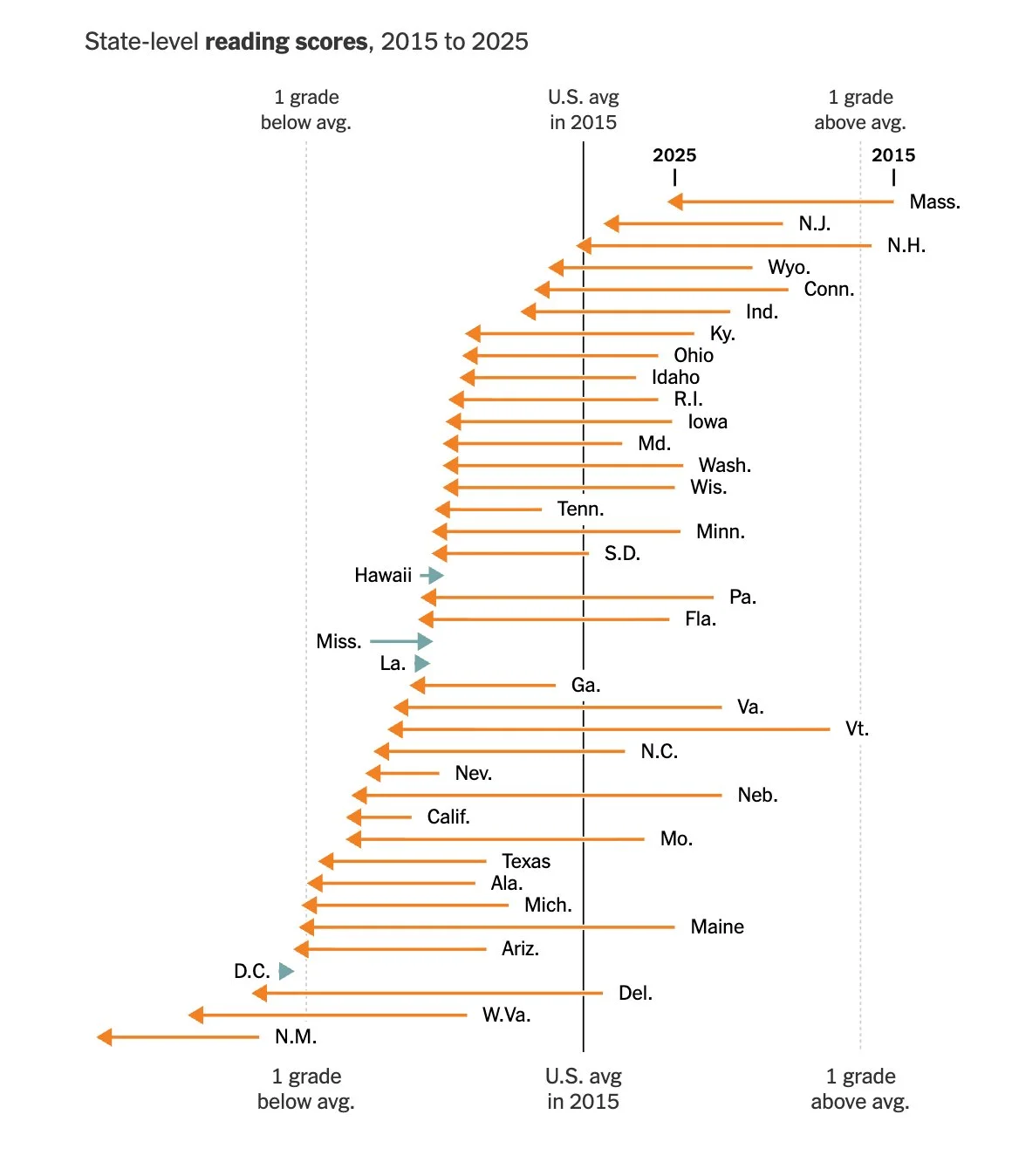
Plus, if we’re gonna talk about parental involvement and after school tutoring, one interesting thing about the 2015-2025 drop is that it’s happening across all income levels and most pronounced at middle income levels, where I’d imagine there is a lot of parental and after school support.
The data is interesting, and I suspect there are multiple causes adding up.