Left: numeral; middle: regular writing; final: certain formal and non-forgery usecases.
または in point 7 means either variant is OK
The last line says one can use the modern yen sign as well (though some would argue that it’s bad manners in at least some situations, but I have no dog in that fight).
万 = 10k. Several countries use both 1k and 10k units (Japan traditionally was on the 10k side but had a lot of influence so now we see both a lot. A used car price might be 130万円 or something ( = 1,300,000 yen)
We have a way of writing numbers in certain situations. Think of it like checks in the US where we write things in a certain way so that the numbers can’t be easily changed to increase the value or something.
I see, the right column is used because they share their Chinese reading 音読み with the numbers, that makes sense. I don’t know all of the Kanji, but the ones I know fit.


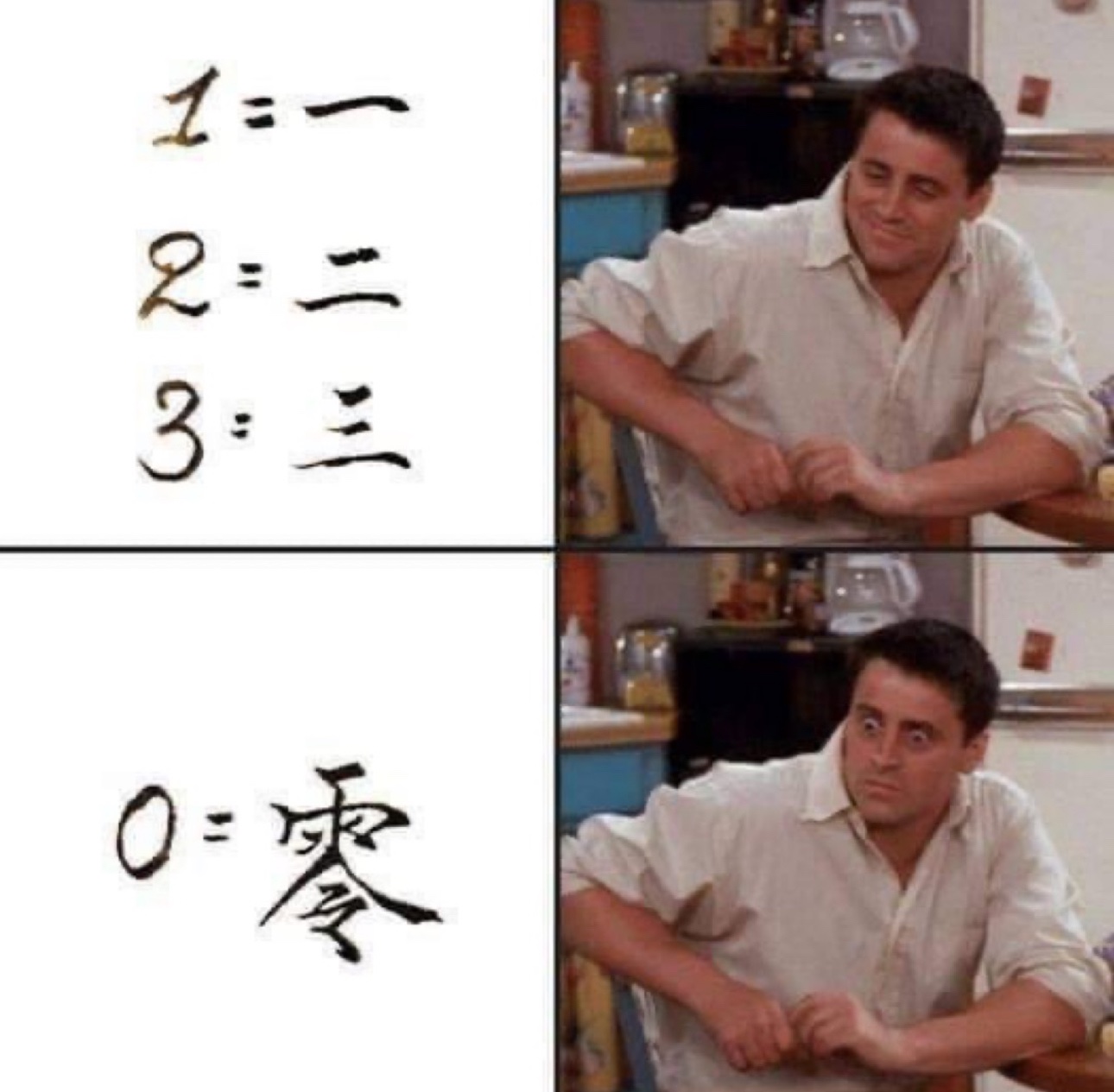
Japanese enters the chat:
Left: numeral; middle: regular writing; final: certain formal and non-forgery usecases.
または in point 7 means either variant is OK
The last line says one can use the modern yen sign as well (though some would argue that it’s bad manners in at least some situations, but I have no dog in that fight).
万 = 10k. Several countries use both 1k and 10k units (Japan traditionally was on the 10k side but had a lot of influence so now we see both a lot. A used car price might be 130万円 or something ( = 1,300,000 yen)
Chart from here that looks better: https://saiseich.com/business/kanji_kingaku/
We have a way of writing numbers in certain situations. Think of it like checks in the US where we write things in a certain way so that the numbers can’t be easily changed to increase the value or something.
I see, the right column is used because they share their Chinese reading 音読み with the numbers, that makes sense. I don’t know all of the Kanji, but the ones I know fit.