

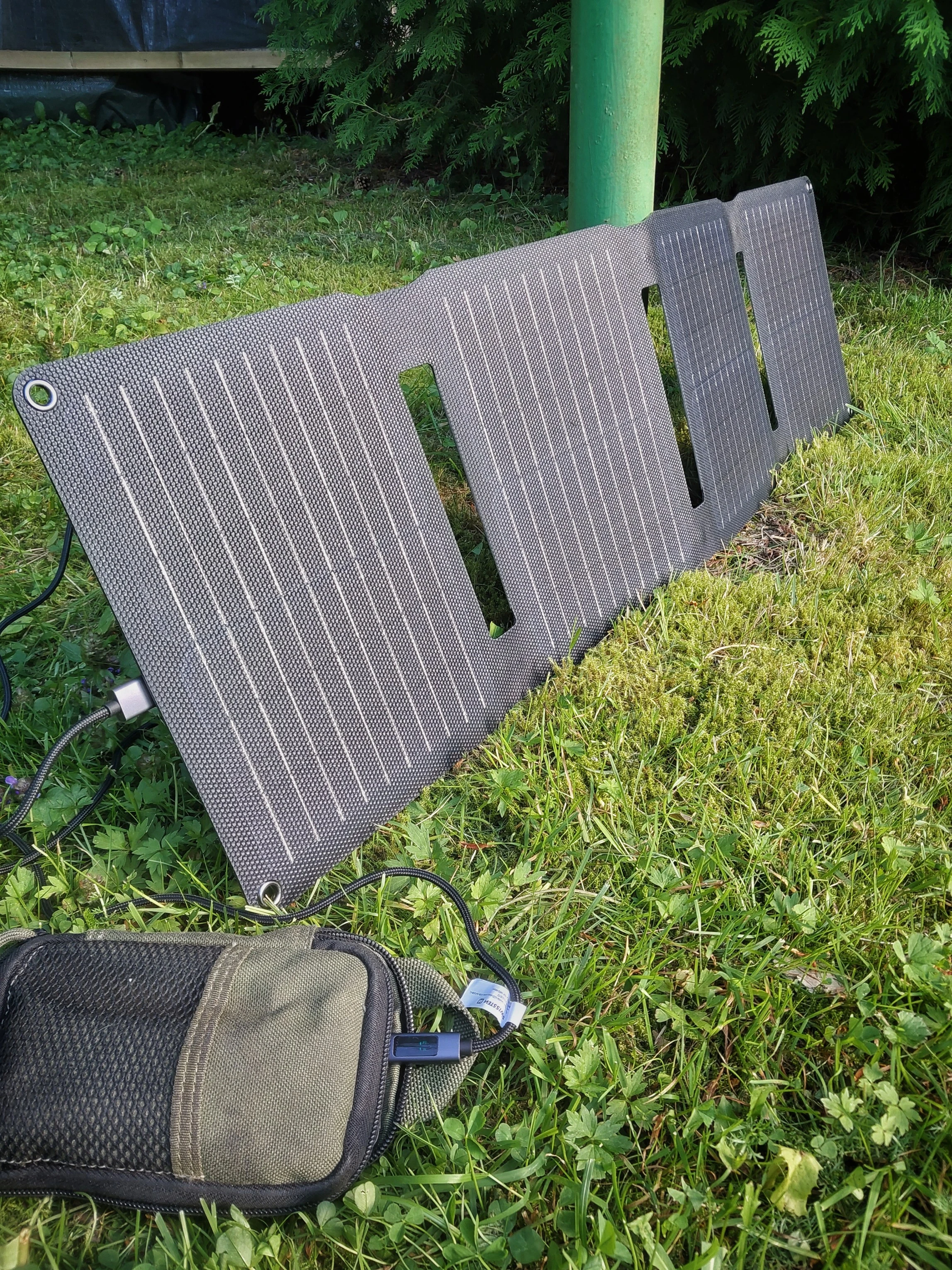
I’m only half kidding. I’m a bit of a prepper and I have lots of powerbanks and devices that charge from USB but besides idling my truck I really had no other way to charge any of them in case of a long-term power outage which seemed a bit of an oversight on my part.
Not like this solves the issue. 30 watts (under ideal conditions) isn’t much but it’s a start.
If the “apocalypse” happens it would be more appropriate to be concerned with food growing and preservation and not USB devices (other than maybe flashlights or shortwave/Ham radio) or other electronics that have no real purpose.
As far as longer-term power outages go these power banks aren’t too bad, but you gotta consider the food situation again and keeping it safe to eat. A rotating set of banks and a good peltier cooler will help keeping some food cool, but not cold enough for long term. I’m sure you have water filters, chlorine tabs, etc. to keep drinking water safe.
I’ve got enough food stocked up to last me months. I just don’t want to be eating my rice and beans in the dark.
productive gardens and food sources > than deep pantry
I have both and can replenish and scale, shift my intake strategies as resources become harder to allocate.
My focus is on casual prepping as a hobby that in the worst case can one day turn out to have been useful. Actual self-reliance is a full-time job. The vast majority of people have virtually nothing stocked up. Someone who has intentionally put aside supplies for even a week is ahead of 99% of people. It takes surprisingly little to cover one’s basics and anything extra is a luxury.
Being able to hunker down the first week or two is critical. Fist-fighting at the gas station is not what one wants to be doing during the early days of collapse.
Vast majority of people do not own enough land to grow even close to all their own food.
I focus on the higher valued things instead. Mostly anyway. Along with experimenting with what I can get to thrive in my area.
I have just over an acre of highly productive riverfront land. I have multiple garden, orchards, chickens and can add a pair of goats readily.
The native landscape and wildlife that borders my property and is within walking distance is wildly abundant. Knowing what to forage, the native plants that are edible and medicinal is paramount to long term and situational survival, bridging the gap. Knowing where to fish and hunt and becoming familiar with the critters in my region is also hugely valuable.
You’d be surprised on how much one can grow using permaculture and understanding the seasons and capabilities in your region.
Full apocalypse is silly to prepare for.
But interruptions are totally a valid thing. Power outage for a week following a storm for example.
In that case I would probably end up cooking over a wood fire if I am still hungry after devouring the entire content of my freezer. Not letting the ice cream go to waste!
Being able to recover after the apocalypse is also good, and having a useful cross-section of humanity’s knowledge would help with that.
There is no recovery after actual apocalypse unless you are fully capable of maintaining an essentially fully off-grid village full of the skills, tools, and stock needed in pre-1850-ish America. If actual supply chain collapse occurs there is nothing left to restart modern civilization once all the people with knowledge and skill starve and the ability to replace parts vanishes thanks to global manufacturing and resource extraction being so compartmentalized. Digital media will become difficult if not impossible to access, and picking up books to learn how to live after it’s already collapsed will also be difficult as libraries are few and far between, and even those will have a limited how-to section for a manual skill survival society.
Being able to sustain oneself safely after an acute natural disaster is the goal.
Natural disaster, or even just illness and you can’t go to the shops for a few days.
I have heard of people that routinely don’t have even enough food for a weekend in their house.