

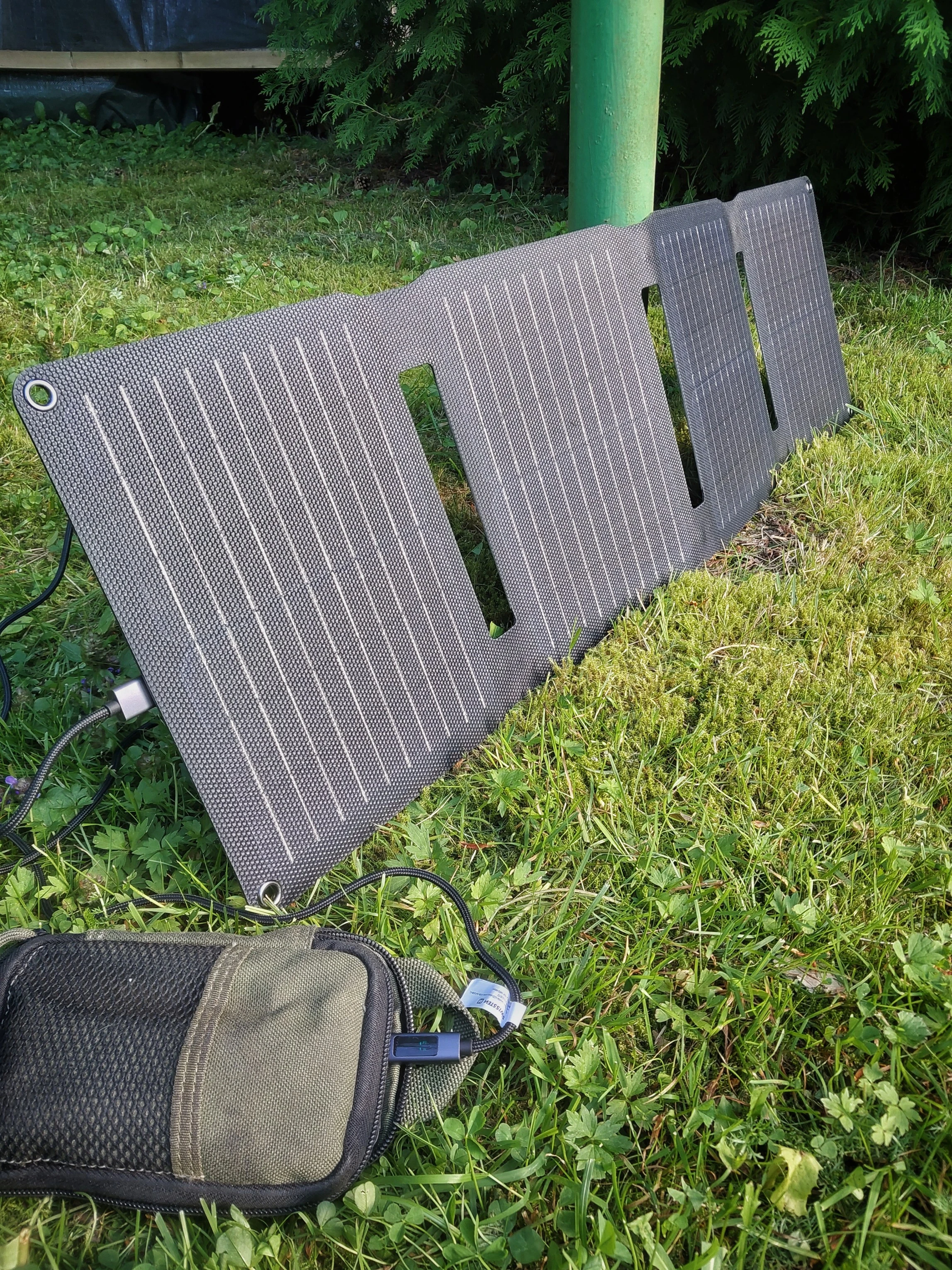
I’m only half kidding. I’m a bit of a prepper and I have lots of powerbanks and devices that charge from USB but besides idling my truck I really had no other way to charge any of them in case of a long-term power outage which seemed a bit of an oversight on my part.
Not like this solves the issue. 30 watts (under ideal conditions) isn’t much but it’s a start.
Also be careful storing powerbanks at full charge, charge them at 80% or ideally around half for maximum longevity
Also don’t charge devices directly from solar power because voltage changes drastically due to sun movement and clouds. Better load a power bank and use that to charge the other devices as power banks are much more resilient to changing voltages.
Unless your power bank has a built in charge controller, this should also include your power bank. At its core, a power bank is nothing more than a big ass lithium ion (or maybe potassium ion, if it’s newer) battery, just like the one in any other device.
i think you mean sodium ion?
Potassium ion?
You’re saying I can ditch the lemons and power my potato with bananas?
Indeed. They’re all the rage in China right now (I AM NOT A TANKIE). Some are predicting they’re the “next generation” of battery technology.
https://en.wikipedia.org/wiki/Potassium-ion_battery
Errr I am pretty sure those are currently only in use in prototyping and research, did you mean a different battery technology?
Yeah, I think I meant Sodium-ion
It also saves a lot of money to do this. I’ve found it takes almost as much power to go from 80 to 100 as it does to go from 0 to 80.
It doesn’t. It takes longer to charge to 100, but the efficiency is basically the same. The amp draw drops after 80%. If you are using a engine to charge, you would lose efficiency because of the extra time, but using solar wouldn’t have this issue.