For those curious, in this case you can say you have Müllerian agenesis syndrome. Or MRKH syndrome, or vaginal agenesis, which are other names. You then do have a vulva, though.
Another is estrogen insensitivity syndrome (though there are very few cases of these). People with these develop a masculine body (with testes and a penis).
WNT4 deficiency is also interesting, as it yields breast development but a lack of uterus and vagina, with hair growth on the breast and face.
Or, as the below poster said, no need to say anything. Shrug.
I would also not say anything when it’s likely not relevant. But unless you’re in danger by outing yourself I don’t think you should be lying to doctors about having conditions you do not or saying you’re intersex when you’re transgender.
It’s an abbreviation of Mayer–Rokitansky–Küster–Hauser syndrome.
Basically it’s a syndrome by which the Müllerian ducts (the embyrological precursors to certain reproductive parts) partially to fully don’t develop, resulting in a lacking uterus and vagina.

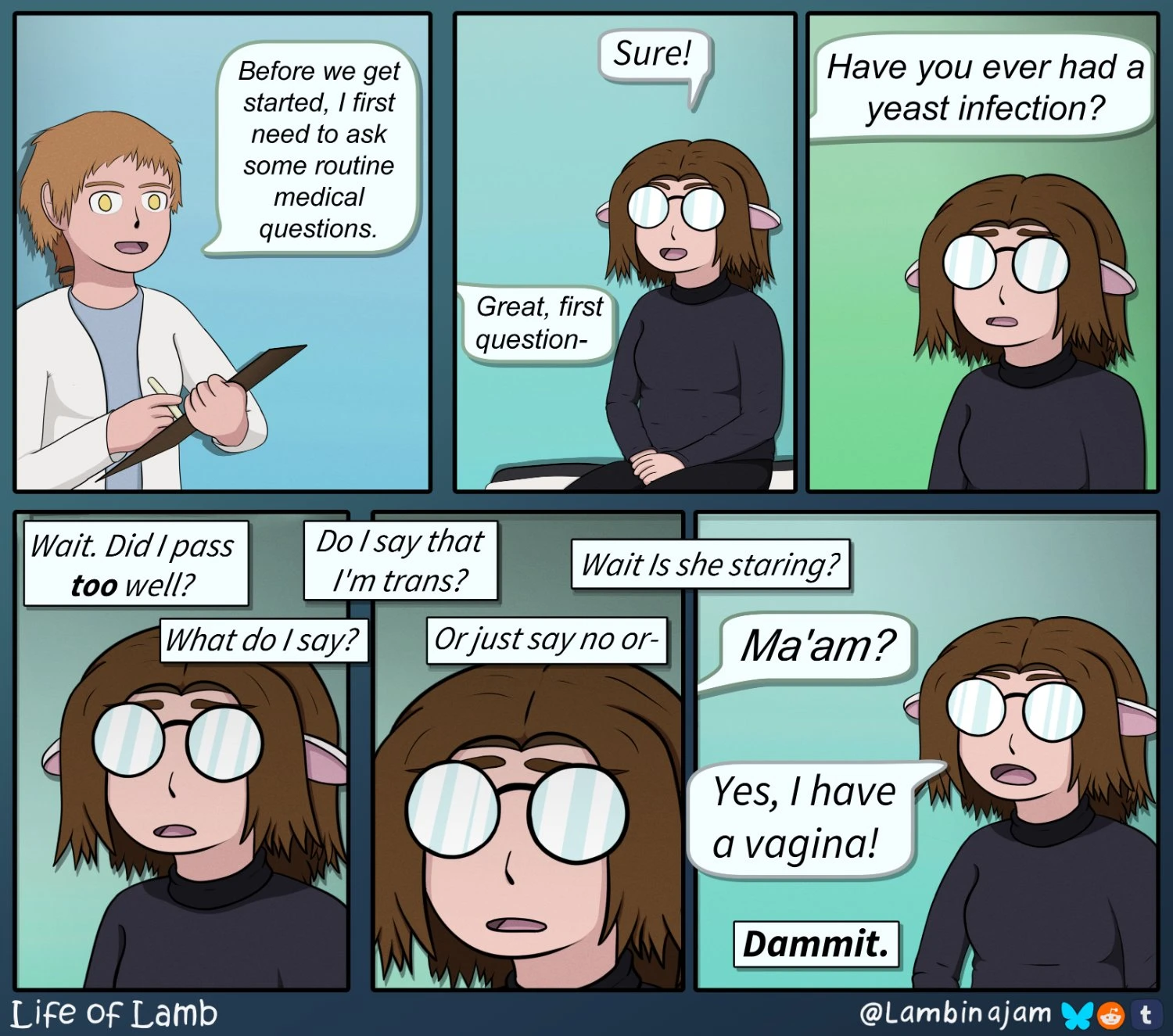
For those curious, in this case you can say you have Müllerian agenesis syndrome. Or MRKH syndrome, or vaginal agenesis, which are other names. You then do have a vulva, though.
Another is estrogen insensitivity syndrome (though there are very few cases of these). People with these develop a masculine body (with testes and a penis).
WNT4 deficiency is also interesting, as it yields breast development but a lack of uterus and vagina, with hair growth on the breast and face.
Or, as the below poster said, no need to say anything. Shrug.
I would also not say anything when it’s likely not relevant. But unless you’re in danger by outing yourself I don’t think you should be lying to doctors about having conditions you do not or saying you’re intersex when you’re transgender.
What would be the point or effect of saying “I have MRKH”?
It’s an abbreviation of Mayer–Rokitansky–Küster–Hauser syndrome.
Basically it’s a syndrome by which the Müllerian ducts (the embyrological precursors to certain reproductive parts) partially to fully don’t develop, resulting in a lacking uterus and vagina.
So it’s to say “don’t expect me to have a functioning uterus”? I was worried I missed the point
Basically, yeah. The syndrome can occur with cisgender people too, so it’s a nice safe way to say you don’t have a uterus without outing yourself.