Doesn’t the USA use the word “calories” sometimes for kilocalories in food? So they divide the actual amount of calories by 1000. They also round certain things down, so that when they say “zero calories”, the can can actually have “3600 calories”?
Yes, and then they have a whole thing about how under 5 kcal per serving can be rounded to zero because it’s negligible.
That’s why despite nobody on the planet having ever eaten a single tic tac at a time, the serving size is 1 tic tac. That’s only 4 kcal, so in the US they can call it a “calorie-free snack”
4 kCal is a lot, around twice what a normal person needs per day. There is cal (small calorie) and Cal (large calorie), 1 Cal is 1000 cal or 1 kcal, 1 kCal would be 1000 kcal or 1 Mcal.
US FDA nutritional guidelines are based on 2,000 kilocalories a day. Europeans use kilojoules to the same effect.
I’m not sure any food in the USA uses a single calorie as a measurement of anything, because kilocalories make more sense in terms of units of scale in the human diet.
2000000 of anything sounds like a lot, so why not use prefixes to simplify?
According to the FAO, the average minimum daily energy requirement is approximately 8,400 kilojoules (2,000 kcal) per adult and 4,200 kilojoules (1,000 kcal) a child.[3] This data is presented in kilojoules, as most countries today use the SI unit kilojoules as their primary measurement for food energy intake,[4] with the exception of the USA,[5] Canada,[6] and the UK, which use kilocalories or both.
2000000 of anything sounds like a lot, so why not use prefixes to simplify?
That’s why you either use kcal (or Cal) or kJ, but not Mcal (or kCal, which is easily confused with kcal) or MJ, because most things you eat and drink are between 0 and a few hundred kcal. This way you have one unit and keep it consistent instead of switching between kcal and Mcal all the time or saying awkward stuff like you ate something that only had 0.004 Mcal.
Europeans use kilojoules to the same effect.
While kJ is required in labeling in Europe most people still use kcal for everything. AFAIK the only country somewhat consistently using kJ is Australia (the one with the kangaroos).


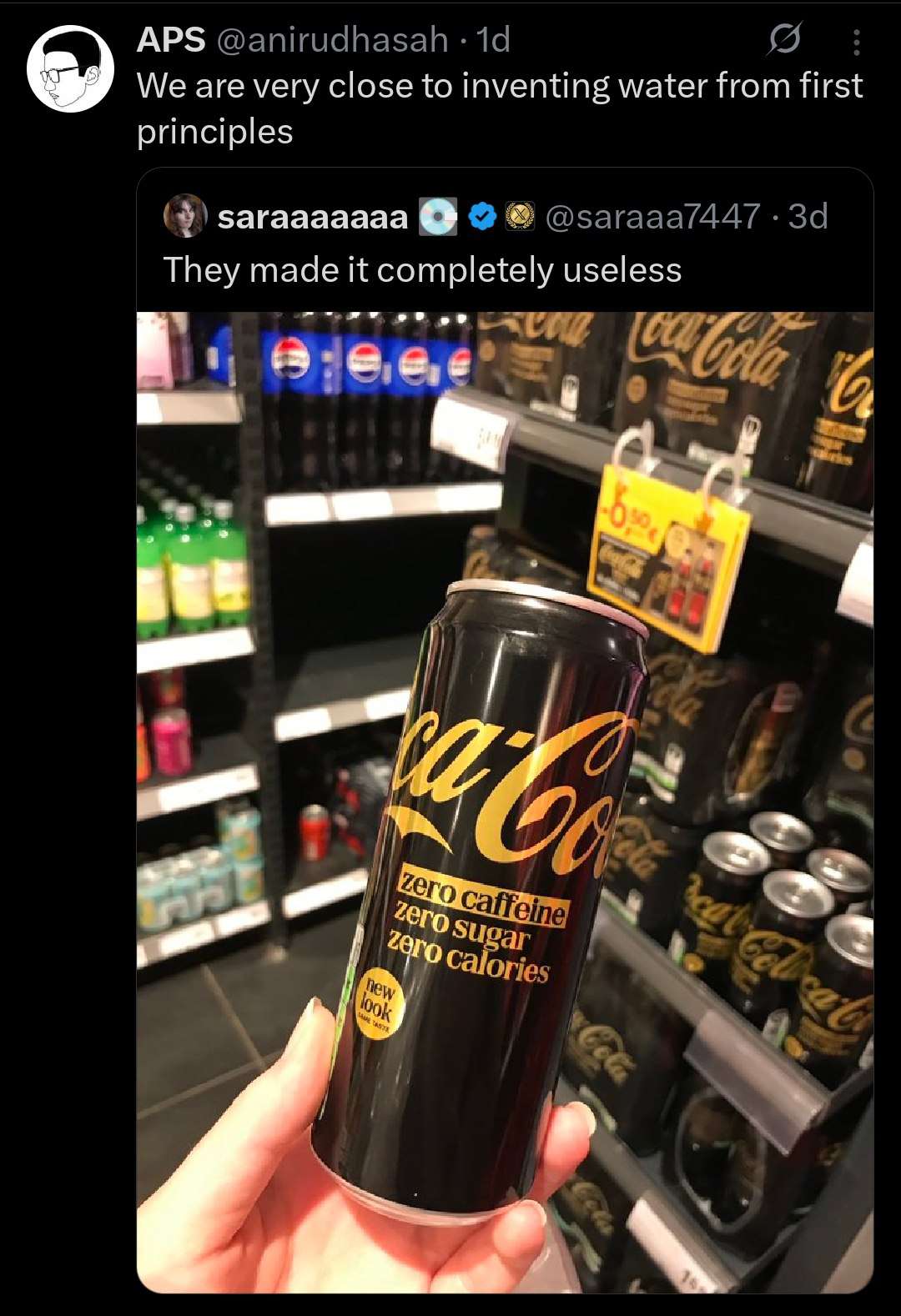
Doesn’t the USA use the word “calories” sometimes for kilocalories in food? So they divide the actual amount of calories by 1000. They also round certain things down, so that when they say “zero calories”, the can can actually have “3600 calories”?
Yes, and then they have a whole thing about how under 5 kcal per serving can be rounded to zero because it’s negligible.
That’s why despite nobody on the planet having ever eaten a single tic tac at a time, the serving size is 1 tic tac. That’s only 4 kcal, so in the US they can call it a “calorie-free snack”
kCal is a normal measurement in the UK too. I think anything being 4 kCal is probably negligible
4 kCal is a lot, around twice what a normal person needs per day. There is cal (small calorie) and Cal (large calorie), 1 Cal is 1000 cal or 1 kcal, 1 kCal would be 1000 kcal or 1 Mcal.
US FDA nutritional guidelines are based on 2,000 kilocalories a day. Europeans use kilojoules to the same effect.
I’m not sure any food in the USA uses a single calorie as a measurement of anything, because kilocalories make more sense in terms of units of scale in the human diet.
2000000 of anything sounds like a lot, so why not use prefixes to simplify?
Source: https://en.wikipedia.org/wiki/List_of_countries_by_food_energy_intake
That’s why you either use kcal (or Cal) or kJ, but not Mcal (or kCal, which is easily confused with kcal) or MJ, because most things you eat and drink are between 0 and a few hundred kcal. This way you have one unit and keep it consistent instead of switching between kcal and Mcal all the time or saying awkward stuff like you ate something that only had 0.004 Mcal.
While kJ is required in labeling in Europe most people still use kcal for everything. AFAIK the only country somewhat consistently using kJ is Australia (the one with the kangaroos).
Rounding happens but no, you’ll find nothing when that kind of delta and it’ll be of zero consequences.