Yeah I was going to say, most common sense building codes require external outlets to have protective covers. Leaving it wide open like this is just asking for trouble.
GFCI doesn’t protect against arcs, so AFCI would be necessary to protect against arcing causing fires.
The danger with outdoor outlets is short circuiting (like when water drips onto a live wire), so GFCI is almost always required of outdoor outlets. Generally, outdoor outlets also require covers that keep the receptacle dry, at least when not in use (and more modern code generally requires it have an “in-use” cover that can stay on even when something is plugged in).
But having GFCI isn’t the same as AFCI, so arc fires can still theoretically happen.


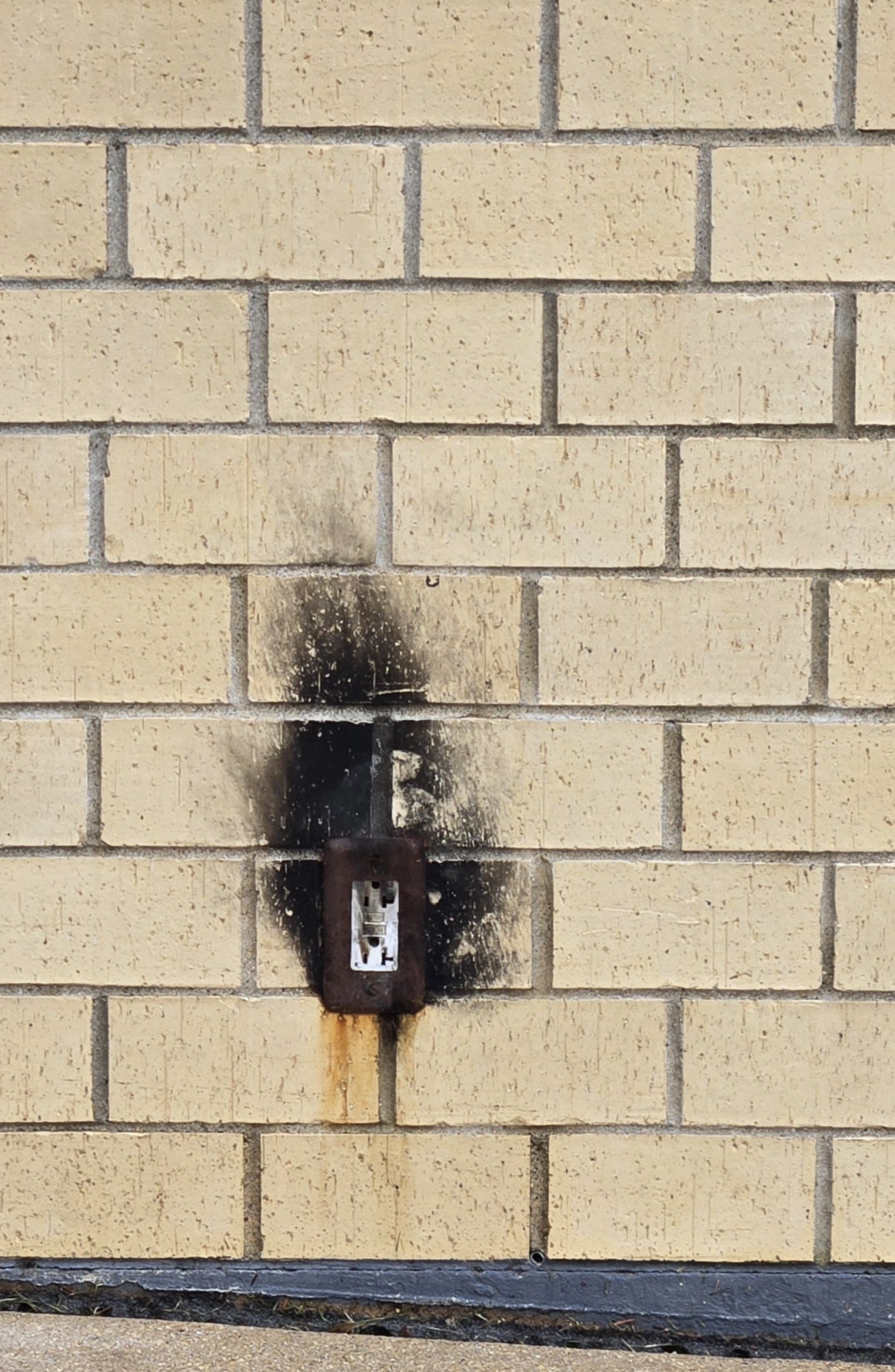
And it’s a GFI (Ground Fault Interrupter) outlet.
Factory defect or electrician defect?
You kinda still need to protect them from the elements, they’re supposed to be covered to prevent water and dust egress.
Yeah I was going to say, most common sense building codes require external outlets to have protective covers. Leaving it wide open like this is just asking for trouble.
Covered car parks usually have some allowances, but as seen, it’ll still rust from the humidity regardless.
GFCI doesn’t protect against arcs, so AFCI would be necessary to protect against arcing causing fires.
The danger with outdoor outlets is short circuiting (like when water drips onto a live wire), so GFCI is almost always required of outdoor outlets. Generally, outdoor outlets also require covers that keep the receptacle dry, at least when not in use (and more modern code generally requires it have an “in-use” cover that can stay on even when something is plugged in).
But having GFCI isn’t the same as AFCI, so arc fires can still theoretically happen.
I’m thinking this one is a user error.
The user is one with the wall now
I don’t think those outlets belong outside.