TVs were always cheap compared to cost to make the things - it’s not just the “oh, they have advertising now” thing.
Source: I worked in electronics retail in the late 80s/early 90s, and in one of the world’s largest consumer electronics firms when my career proper started.
The TVs in the window of the local electronics chain store (or in Walmart) were sold at practically zero margin, or more often than not at a loss. The retail chains would basically hold a gun to the CE companies heads and tell them if you’re not willing to sell at a loss, nothing you make is going in the window display, or worst case we’re not selling you at all.
The retail chains didn’t care because all their profit was in selling accessories and unnecessary extended warranties. The CE companies hoped that they could make it up by selling you the more expensive model they actually made a profit on once you were in the door, or by selling you a VCR or whatever as well.
This is why the TV companies were always looking for a “next big thing” (flat-screen, ultraflat, widescreen, HD, 3D, 4k, 8k…) to differentiate the “next model up”, which is to say the model the store would actually allow them to make a profit on.
This particular race-to-the-bottom mutually assured destruction business model is also the reason there is practically no consumer electronics manufacturing left in the West, of course. And why manufacturers grasp at stuff like advertising.
TVs were always cheap compared to cost to make the things - it’s not just the “oh, they have advertising now” thing.
Yes, and the cost of making them keeps dropping. When you were selling TVs in 1991, a 30 inch TV cost about $500 in 1991 dollars. The technology back then just basically made it complex and labor intensive to manufacture, and they were so heavy that it actually took significant number of human labor hours just to get it from factory to store to the specific store’s display. Merely putting a 30 inch TV in the window of a store was probably a 2-man lift.
Whereas today it’s a bunch of robots in cleanrooms automating production of high volumes of solid state LCD components to where full color displays can be put in cheap appliances, and finished 30 inch TVs being thin and light enough to be moved with one hand while sipping a coffee with the other.
I’m not surprised it’s much cheaper today, even a tiny fraction of the time period you’re talking about, even when back then they were selling at a loss.


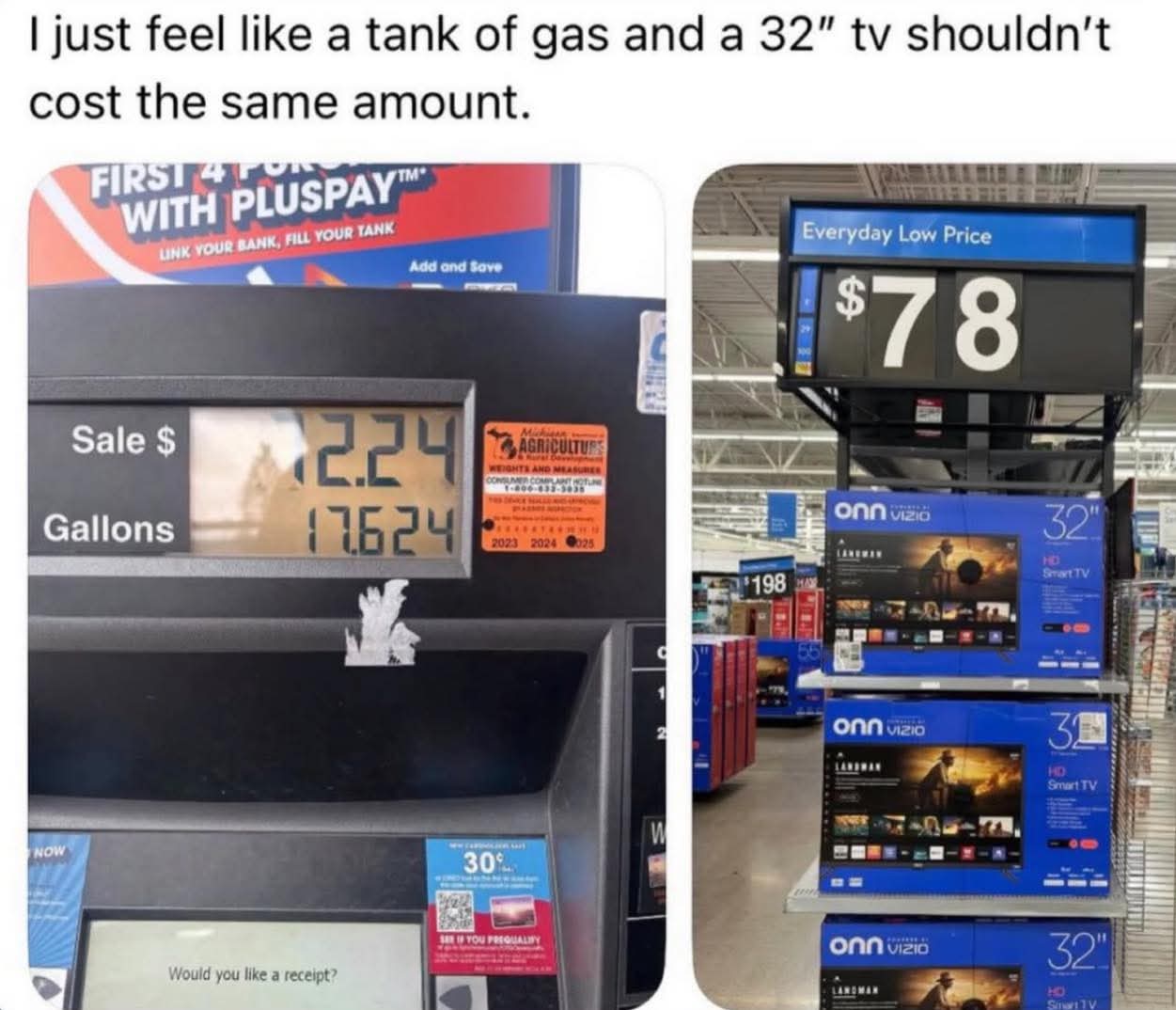
TVs were always cheap compared to cost to make the things - it’s not just the “oh, they have advertising now” thing.
Source: I worked in electronics retail in the late 80s/early 90s, and in one of the world’s largest consumer electronics firms when my career proper started.
The TVs in the window of the local electronics chain store (or in Walmart) were sold at practically zero margin, or more often than not at a loss. The retail chains would basically hold a gun to the CE companies heads and tell them if you’re not willing to sell at a loss, nothing you make is going in the window display, or worst case we’re not selling you at all.
The retail chains didn’t care because all their profit was in selling accessories and unnecessary extended warranties. The CE companies hoped that they could make it up by selling you the more expensive model they actually made a profit on once you were in the door, or by selling you a VCR or whatever as well.
This is why the TV companies were always looking for a “next big thing” (flat-screen, ultraflat, widescreen, HD, 3D, 4k, 8k…) to differentiate the “next model up”, which is to say the model the store would actually allow them to make a profit on.
This particular race-to-the-bottom mutually assured destruction business model is also the reason there is practically no consumer electronics manufacturing left in the West, of course. And why manufacturers grasp at stuff like advertising.
Yes, and the cost of making them keeps dropping. When you were selling TVs in 1991, a 30 inch TV cost about $500 in 1991 dollars. The technology back then just basically made it complex and labor intensive to manufacture, and they were so heavy that it actually took significant number of human labor hours just to get it from factory to store to the specific store’s display. Merely putting a 30 inch TV in the window of a store was probably a 2-man lift.
Whereas today it’s a bunch of robots in cleanrooms automating production of high volumes of solid state LCD components to where full color displays can be put in cheap appliances, and finished 30 inch TVs being thin and light enough to be moved with one hand while sipping a coffee with the other.
I’m not surprised it’s much cheaper today, even a tiny fraction of the time period you’re talking about, even when back then they were selling at a loss.
Shame, I particularly miss Panasonic and Sony