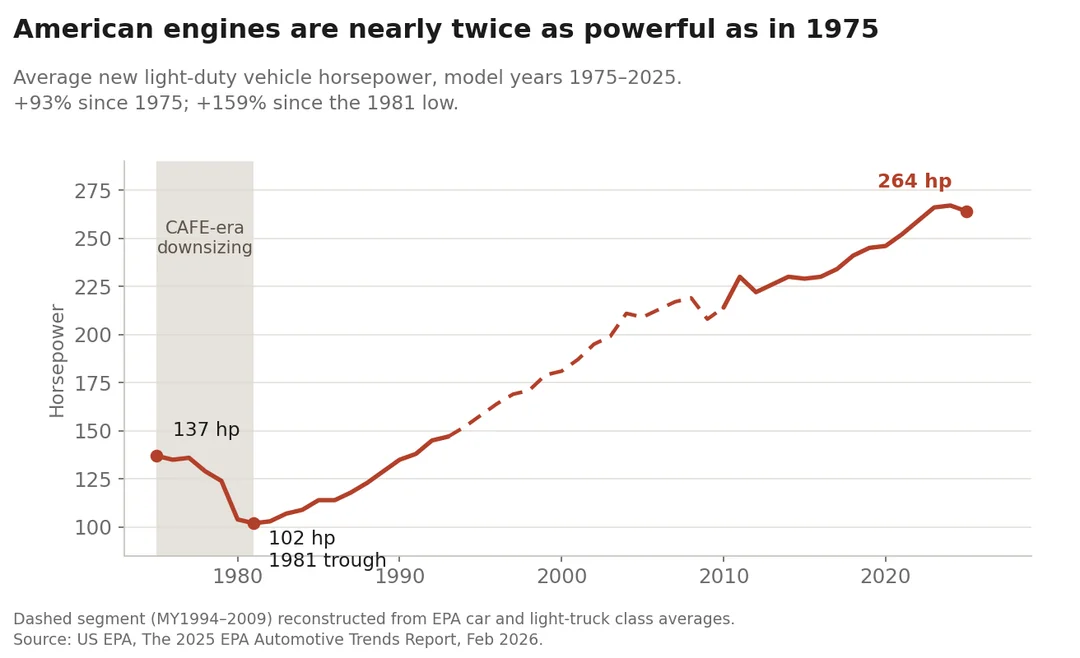
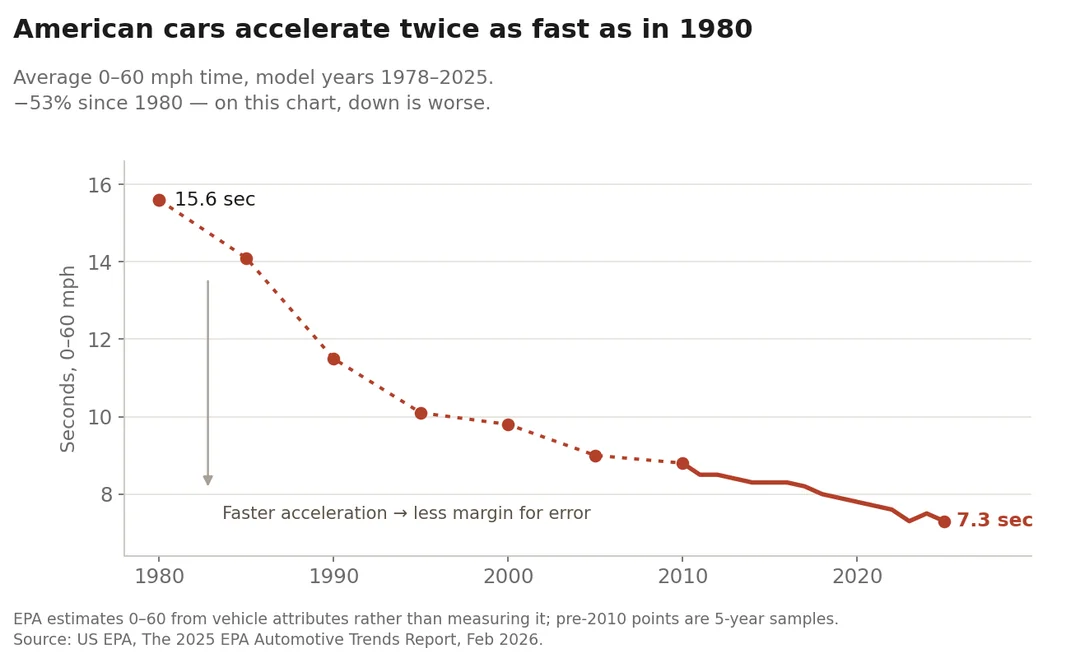
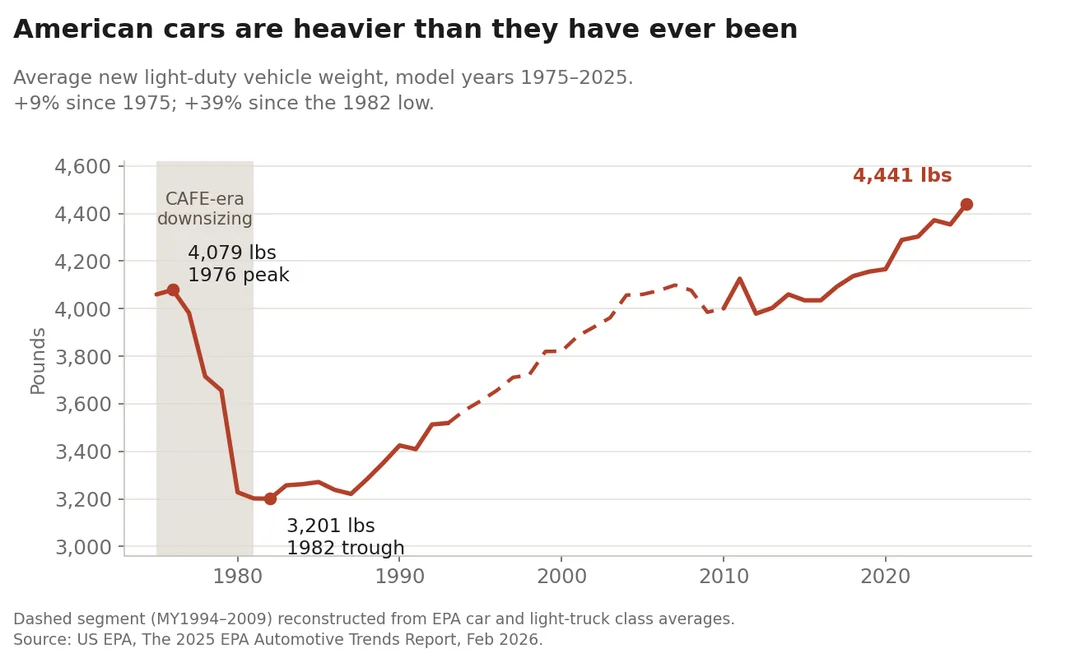
One story is engineering success. The engineers squeeze out so much more performance per amount of gasoline burned, that the cost of extra weight from a fuel economy standard is significantly less than 25 or 50 years ago. If you chart the fuel efficiency over the same time period, the fleet average fuel economy went from 20 to 34 mpg, even as vehicles were getting more powerful and heavier. A 2026 Camry Hybrid has a 232 hp drivetrain (184 hp from the gasoline engine) that manages to push 3700 lbs 0-60 in 6.8 seconds. Those are sports car stats from the 80’s, and yet the modern Camry manages to get 44 miles per gallon in fuel economy. Charting emissions shows an even more pronounced improvement.
Similarly, the rise of electric vehicles has increased the average vehicle weight. Batteries are heavy, and the whole chassis needs to accommodate that.
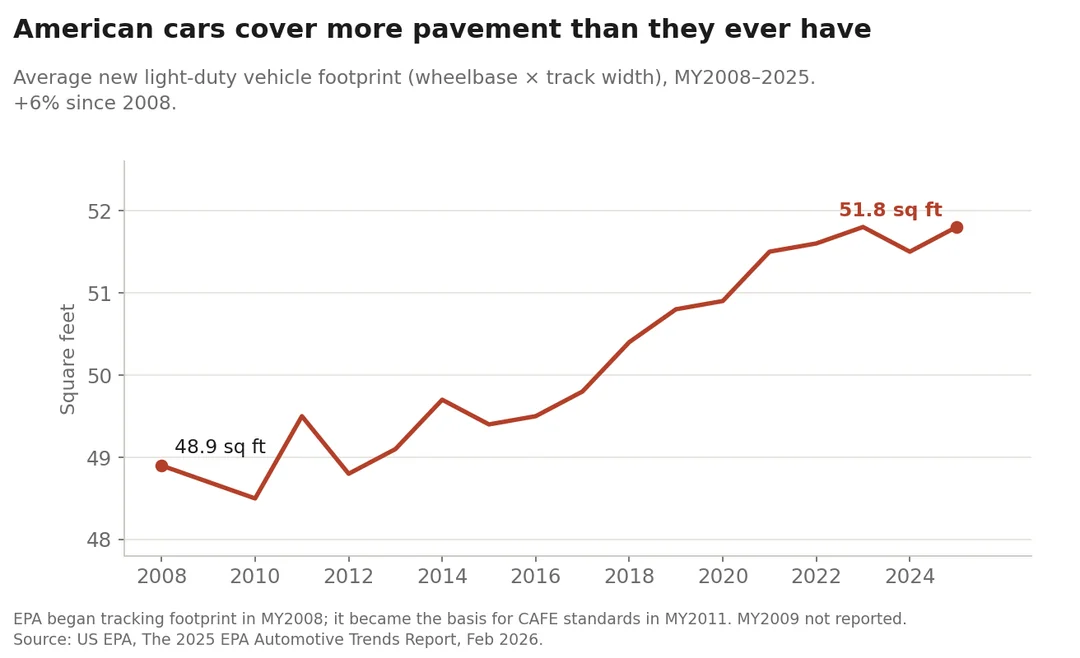
Another story is unintended consequences from dumb regulations. The fuel economy standards were updated for the 2011 model year to allow a sliding scale where vehicles with larger footprints were allowed to be less fuel efficient. Naturally, smaller vehicles were disincentivized, and compact trucks and compact cars all but disappeared. These regs need to be updated, and we’ll see the return of smaller vehicles for those of us who prefer them.
And another story is shifting consumer preferences. For a whole bunch of reasons, Americans have expressed a preference for taller and taller vehicles, where crossover SUVs are much more common than the old wagons, the relative balance of sedans versus SUVs has shifted entirely in favor of SUVs.


There are a few different stories going on here.
One story is engineering success. The engineers squeeze out so much more performance per amount of gasoline burned, that the cost of extra weight from a fuel economy standard is significantly less than 25 or 50 years ago. If you chart the fuel efficiency over the same time period, the fleet average fuel economy went from 20 to 34 mpg, even as vehicles were getting more powerful and heavier. A 2026 Camry Hybrid has a 232 hp drivetrain (184 hp from the gasoline engine) that manages to push 3700 lbs 0-60 in 6.8 seconds. Those are sports car stats from the 80’s, and yet the modern Camry manages to get 44 miles per gallon in fuel economy. Charting emissions shows an even more pronounced improvement.
Similarly, the rise of electric vehicles has increased the average vehicle weight. Batteries are heavy, and the whole chassis needs to accommodate that.
Another story is unintended consequences from dumb regulations. The fuel economy standards were updated for the 2011 model year to allow a sliding scale where vehicles with larger footprints were allowed to be less fuel efficient. Naturally, smaller vehicles were disincentivized, and compact trucks and compact cars all but disappeared. These regs need to be updated, and we’ll see the return of smaller vehicles for those of us who prefer them.
And another story is shifting consumer preferences. For a whole bunch of reasons, Americans have expressed a preference for taller and taller vehicles, where crossover SUVs are much more common than the old wagons, the relative balance of sedans versus SUVs has shifted entirely in favor of SUVs.