


OpenSUSE got me onto Linux and was such a great option for a first distro. I still think about changing back sometimes. I’m surprised it doesn’t get recommended more often.
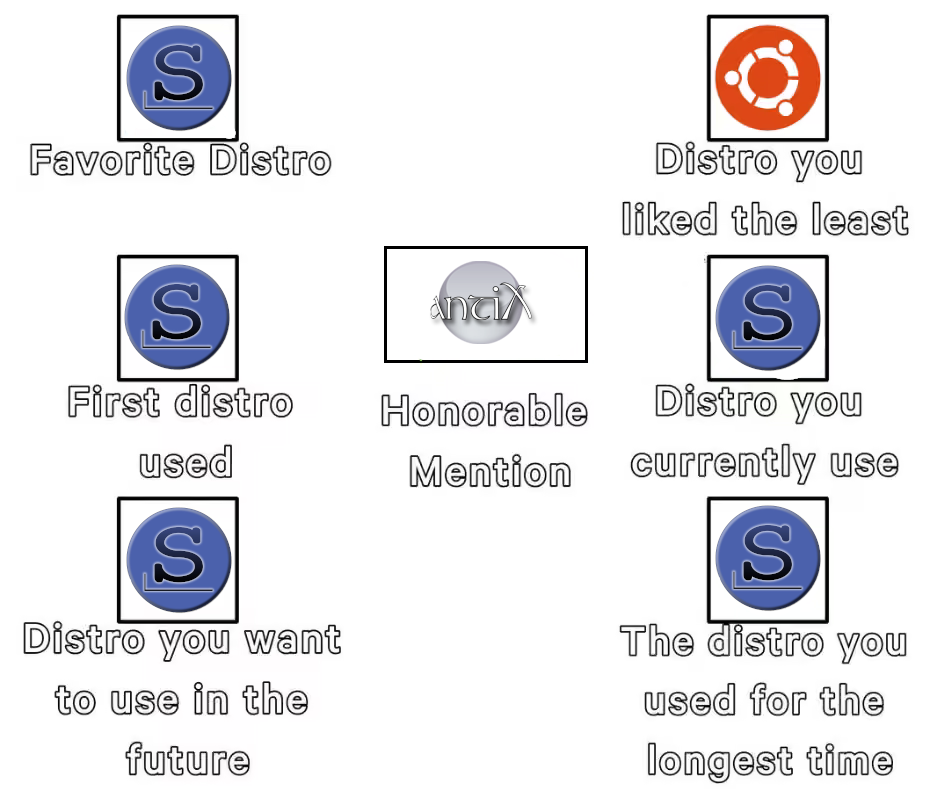
I think I may have a favorite.
I ditched slackware in 98 after the validation issue became starkly problematic.
SLSA.dev .
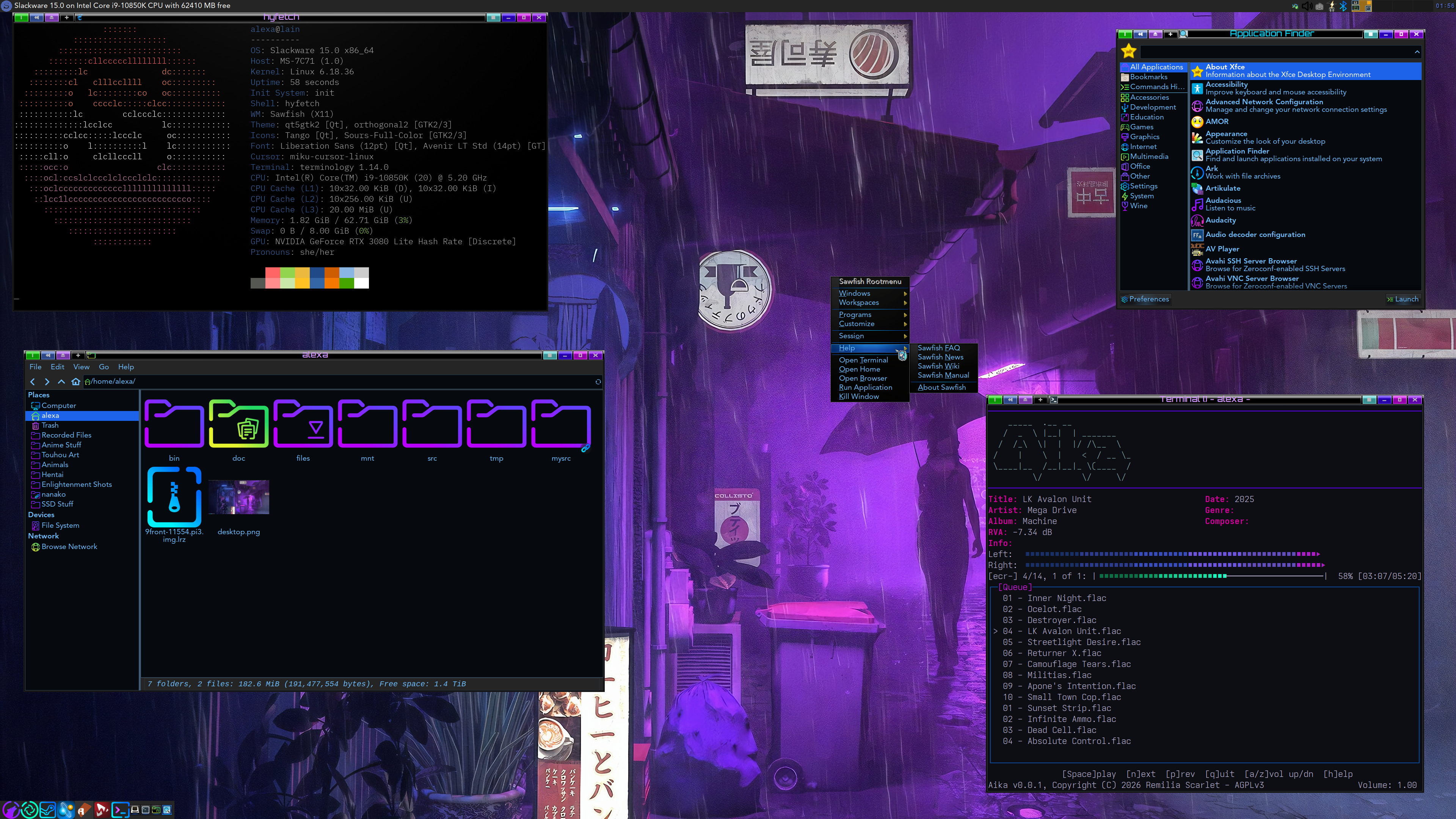
wow… and what DE do you use with Slackware? I assume you just use pure CLI though
Favorite is OpenSuse Tumbleweed. It’s stable mostly, and quite fixable when it isn’t. Just a great overall balance.
My first was actually DSL: “Damn Small Linux”, contained entirely on a CD to remove a TERRIBLY resistant malware from my Windows XP machine. (It was awesome for that! Had no idea what I was doing lol.)
Tried Ubuntu, then Ubuntu Studio, but they didn’t like my Wi-Fi devices back in those days, so I didn’t get to do much with them!
Used Mint seriously on my aging laptop and loved it. It’s such an excellent on-ramp and you can hang out with it as long as you like.
Later tried Manjaro for a while but…it started having some controversial project decisions and just didn’t feel like home.
Using EndeavourOS on my gaming laptop and it works great! Considering migrating though: Arch is an excellent teacher, but I’ve had to spend unexpected weekends fixing weird hitches after updates.
Honorable Mention: Puppy Linux! I used to be able to boot it to any laptop from my Android phone, and that was a really neat trick for public computers and stuff.
Hey I resemble that journey. Very few people metion DSL and Puppy. Those lived on a multiboot flash drive I carry around “JIC” (these days I just bring Mint and Tails).
I just commented elsewhere how Mint became home - that “long as you like” is still going (jeez 8y at this point lol).
Cool! Yeah, they don’t seem to be referenced as much anymore, but they were seriously impressive and had their use cases. :D
that “long as you like” is still going (jeez 8y at this point lol).
Yeah, Mint is often referred to by folks as a “beginner distro” implying you’ll somehow inevitably skill up and distro hop, and sure, plenty do, but it really doesn’t have to be that way!
(Heck, Eliot the super hacker in Mr. Robot used it as his home distro! Lol 😉)
I mean, it’s stable, you can still get newer stuff and gaming via FlatPak, and it’s just overall friendlier. The community is super helpful and nice too!
I personally jumped to OpenSUSE Tumbleweed because I like having new features sooner. (I blame Blender haha!), and honestly, I didn’t expect to fall in love with KDE as much as I did. I really like KDE. :p
I’d always encourage people to try other distros just to see if they do something that fits them better or something, but yeah, you shouldn’t feel any pressure to “graduate” from Mint. It’s lovely. :D
Favorite distro: NixOS First distro used: Ubuntu Distro you want to use in the future: SixOS, Asahi Honorable mention: Fedora Server Distro you liked the least: Ubuntu Distro you currently use: Arch, NixOS The distro you used for the longest time: Arch

I’ve never seen an infographic for “I use arch, btw.” until now.
oh come on. I don’t ever say it outside of meme contexts. I just personally enjoy rolling releases and don’t really like the corporate feeling of Fedora, so i’m left with only really Arch as a good option.
Did you even try void?
Fair point, and Void is cool in its own right, but there are good reasons it mostly falls under “obscure” distro category.
First is, of course, the systemd-free nature of it. Linux world absolutely needs systemd-free distros, but your average Linux user simply doesn’t know how to handle them properly, and the learning curve is somewhat steep. Besides, everyone and everything comes with an assumption you run systemd, so often times, you’ll be on your own figuring out the correct fix.
Second is a relatively small userbase. Void, while not being completely unknown, is not by any means a mainstream distro. We have those - some people still run Slackware, for example - but they quickly fall outside the scope of most users due to a relatively underdeveloped community, which is crucial for a Linux project.
This is why Void is often not even seen as an option.
Runit is actually quite simple. If you want a service that your distro packages, you just have to install it and symlink it’s directory from (in void’s case) /etc/sv/app-or-service to /var/service/app-or-service. Inside that dir you’ll find a “run” script and, maybe, a “finish” script that the service manager (sv) will use to initiate and interrupt the service. This is helpful to know if you want to create custom services; i have some for things like brightness, manual tiling, and clipboard management.
I see! But there’s still much more than service management, not all of it packaged into the “init” part of systemd. And each of these things need to be learned. I’m not saying it’s impossible, but it’s just one more big headache on top of what Linux already is.
Also, out of curiosity from someone who barely touched Void - how do you create a custom service? Is writing run and finish scripts sufficient?
Yeah, that’s all there is to it. The finish script is optional, and rememer to make your links. You can have user level services by making links for runsvdir-USERNAME. This creates a service that manages your services.
It could probably be more robustn but here’s my setup:
$ readlink {/etc/sv,/var/service}/runsvdir-$USER | sed "s:$USER:USERNAME:g"
/home/USERNAME/.dotfiles/runsvdir-USERNAME
/etc/sv/runsvdir-USERNAME

$ print -l /etc/sv/runsvdir-$USER/*(.)
/etc/sv/runsvdir-USERNAME/conf
/etc/sv/runsvdir-USERNAME/finish
/etc/sv/runsvdir-USERNAME/run

$ print -l /etc/sv/runsvdir-$USER/*(.) | to -b -C '#' -A $'\n' cat | sed "s:$USER:USERNAME:g"
# /etc/sv/runsvdir-USERNAME/conf
#!/bin/sh

set -eu

self="$(realpath "$0")"
root="$(dirname "$self")"
user="$(basename "$root" | sed 's:^runsvdir-::')"
home="/home/$user"

groups="$(id -Gn "$user" | tr ' ' ':')"
svdir="$home/service"
#

# /etc/sv/runsvdir-USERNAME/finish
#!/usr/bin/env sh

set -eu

self="$(realpath "$0")"
root="$(dirname "$self")"

[ ! -e "$root/conf" ] || . "$root/conf"

sv -w600 force-stop "$svdir/"\*
#

# /etc/sv/runsvdir-USERNAME/run
#!/bin/sh

# start up for user-level service configuration

set -eu

exec 2>&1

root="$(realpath "$0" | xargs -d '\n' dirname)"
[ ! -e "$root/conf" ] || . "$root/conf"

exec chpst -u "$user:$groups" runsvdir -P "$svdir"
#
For clarity, the
tocommand is an xargs alternative that’s not out, yet.I see, thanks!
No. I’ve never understood the point of it
well, if you were serious in your deduction, one point of it is that arch is not your only option.
Ubuntu -> Mint.
I don’t know why I’d change, Mint just works. That’s all I ever wanted.
Same, really. I keep trying other distros, and have Kubuntu on my laptop right now, but it’s still just a tiny bit too buggy compared to Mint.
I always come back to Mint. Far from just a “beginner distro”, it’s a practical and solid choice for anyone devoted to something other than tweaking, perfecting, and personalizing an OS. Not that there’s anything wrong with that if it’s your passion and you have the time. Personally, I wouldn’t mind making my perfect Arch or NixOS setup, but my free time is limited and there is always something I’m interested in working on more.
All I ever wanted. All I ever needed. Heeeere , in my arms.
- Favorite distro: Debian
- Also favorite distro: Arch
- First distro: Red Hat Linux 5.1 (not RHEL!).
- Honorable mention: Slackware for most of the 00s
Favorite: Debian Stable (For my uses, it was the least trouble)
First: Slackware (1995, installed from floppy disks, also a short stretch in 2009)
Current: Linux Mint Debian Edition (LMDE) (Using because I need to support users on stock Mint)
Distro you liked the least: Novell SuSE (Used in a corporate setting)
Distro you want to use in the future: Unknown
Distro you used for the longest time: Debian Stable (15 years)
Distro everyone likes but I don’t: Ubuntu
Honorable mention: DietPi (RaspberryPi and SBC focused OS)
Over time, I’ve used quite a lot of different distros: Red Hat, Red Hat Enterprise, Scientific, CENTOS, Fedora, Mandrake, Damn Small, Puppy, CrashBang, Raspbian, Bazzite, to name just the ones I can remember off the top of my head now.
Are LMDE and stock Mint close enough in versions and features that you can always efficiently support stock Mint users?
Also, is the base Mint software updated regularly, or does it depend on the Debian 2-year cycle?
Yes as far as I’ve found so far, the features track quite well, and I’m really aiming to get proficient with the standard interface. I’ve found a few minor differences, but I tried stock Mint (which is Ubuntu 20.04 based) for a while, and I didn’t want to go backwards from Trixie (the current Stable Debian version) so I opted for LMDE which is based on Trixie. I use Debian Stable because of the “2-year cycle” (that’s why it’s called stable); Because stock Mint tracks the latest LTS release of Ubuntu, it’s actually a fair bit more out of date than Debian at this stage, and the next Mint version, based on the new LTE Ubuntu, isn’t slated to come out until December.
So far it’s not been too bad for a hybrid system - I have had a couple of issues, but this is most likely attributable to being a hybrid. I’ve found that I like Cinnamon, which stock Debian does not (as far as I know) support yet - I have used MATE for about 15 years because I don’t get on with Gnome 3 or KDE. You get all the nice things about Mint that I found impressive when I tested it - the printer and scanner support is very good, and the configuration utilities are quite reminiscent of Windows ones (good for new users, but I personally don’t care). Still not sure if I’m going to stick with it long-term, but happy with it for now - I largely stopped distro-hopping when I switched to MATE.
Thanks for sharing!
As per Cinnamon on Debian - I certainly remember installing Cinnamon version of Debian 12 (“Bookworm”), so it does exist, unless it was removed in Trixie. Check the installer options :)
First? Redhat.
Used? Gentoo, Debian, Mepis, sidux, peppermint, mint, fedora, cachyos, puppy, damnsmall, evil entity, suse, opensuse, Slackware, arch, and who knows how many more.
Using right now: Debian, fedora, cachyos, opensuse, Slackware. Different distro depending on need and device.
Favorite? Real soft spot for mepis, it made it easy back in the day. Fedora right now: it always just works, there is nothing to do just update and move on. Also Debian. Because Debian.
Worst: Ubuntu. Such a piece of crap, always breaking since first release.
- Favourite Distro: Void Linux
- First Distro Used: Linux Mint
- Distro You Want To Use In The Future:
- Linux: Guix System
- Other: 9front
- Honourable Mention: FreeBSD
- Distro You Liked The Least: Fedora Atomic
- Distro You Currently Use: Devuan GNU+Linux
- Distro You Used For The Longest Time: Arch Linux
This person deeply hates all modern computing
Funny, Debian is the reason I came to Arch in the first place and never really left. I like Debian, but once you need more recent versions of something, things quickly get messy.
My journey was: Ubuntu, Debian, ChrunchBang, ArchBang, Arch. Not a big fan of distro hopping, so I’ll probably stay like this or try Fedora if ever I want something non-rolling again.
Favorite: MX Linux
First Distro Used: Ubuntu 6.06
Distro You Want to Use in the Future: CachyOS
Honorable Mention: Pardus
Distro You Liked the Least: Mandriva
Distro You Currently Use: Bazzite
The Distro You Used for the Longest Time: Opensuse
Over 20 years I’ve been trying many distros and even rolled my own and now I’m a happy mint user.
Did I do it backwards?When you surf the oceans of Distros long enough, I think you just get tired and the wanderlust fades. I know I did. Mint is a fine Distro, the Toyota Camry of distros. Solid and dependable with all that you need. It just doesn’t look cool to all the hip-cat kids and their bleeding edge Arch.
I have settled on Fedora. And I prefer Plasma over Gnome, so I use Kinonite instead. There is even less hassle and effort that way. I don’t even go to the bother of doing updates myself. It all happens in the background. Like you, I just want to use my computer. Not fiddle with it anymore
Did you ever do a major version update (i.e. one that’s based on a new Ubuntu LTS release than the one before)? AFAIK they still recommend that you do a fresh install every time the switch the Ubuntu base, which makes me hesitate to recommend it to newcomers - Debian and Ubuntu have always updated in place for me without major issues.
I did use Mint in like 2018, though, it was neat in general.
First: Slackware (there were 2 or 3 distributions at the time… also so many floppies)
Next: Mandrake.
Next: Debian
Next: Ubuntu (and variants, didn’t like it, was brittle and messy)
Next: Gentoo (didn’t like it much when I did an update after three or four months idle, might be on me)
Next: Manjaro (self immolated at some point just because)
Next: OpenSuSE (soon switched to TumbleWeed, was rock solid, but didn’t like one of my new machines for some reason)
Next: Fedora (current, no issues, I’d still prefer a European system, but meh.)I probably forgot a few, but that’s more or less the last thirty years. Unless there’s an issue, I see no reason to change. They all pretty much install the same thing anyway, and I want to use the machine, not configure it. The system ought to be as un-noticeable as possible IMO.