

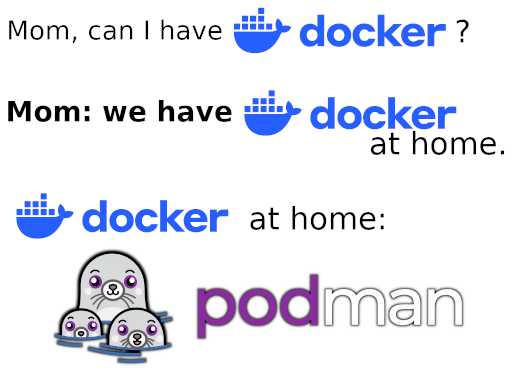
EDIT: For some context, I recently gave podman another go. I have a few services on my homelab server set up in docker containers, so I tried migrating to podman.
After the second major bug (open issue on github) I encountered looked like it would require completely dropping using compose files to work around, I gave up and went back to docker.
I like the idea of podman, but it’s just not stable. I’ll try again in a year or so.
As a bonus, docker’s CLI is significantly nicer.
I agree that ergonomics are also important, but for me not the top priority for me. For Podman, I like the way I can use Quadlet to quickly deploy and run containerized stuff.
However I really like it for building and running my own app stack pods. The combination of Quadlet and SystemD instance aliases is very powerful. I use this to drive all kinds of configuration automation.
Any cool examples? I’m still dipping my toes into systemd
The usage is simple. If you name a quadlet (or systemd service unit file) with an @ in it then you can use it. Like
foo@.containerthen anything you put between the @ and . is passed into the resulting unit file as %i.So
systemctl start foo@bar.servicewill pass ‘bar’ in where %i exists in the unit file. From there you can use it in a StartPreExec or whatever else to do instance specific stuff when the instance of the containerized service start.Like
ExecStartPre=/usr/local/bin/activate_config %ifor example. A contrived example but hopefully you get the idea: with one quadlet file and a little scripting you can start many instances of a service that each automatically pull in their own configs.That is cool. A creative use of their templates. Thanks for giving me some food for thought.