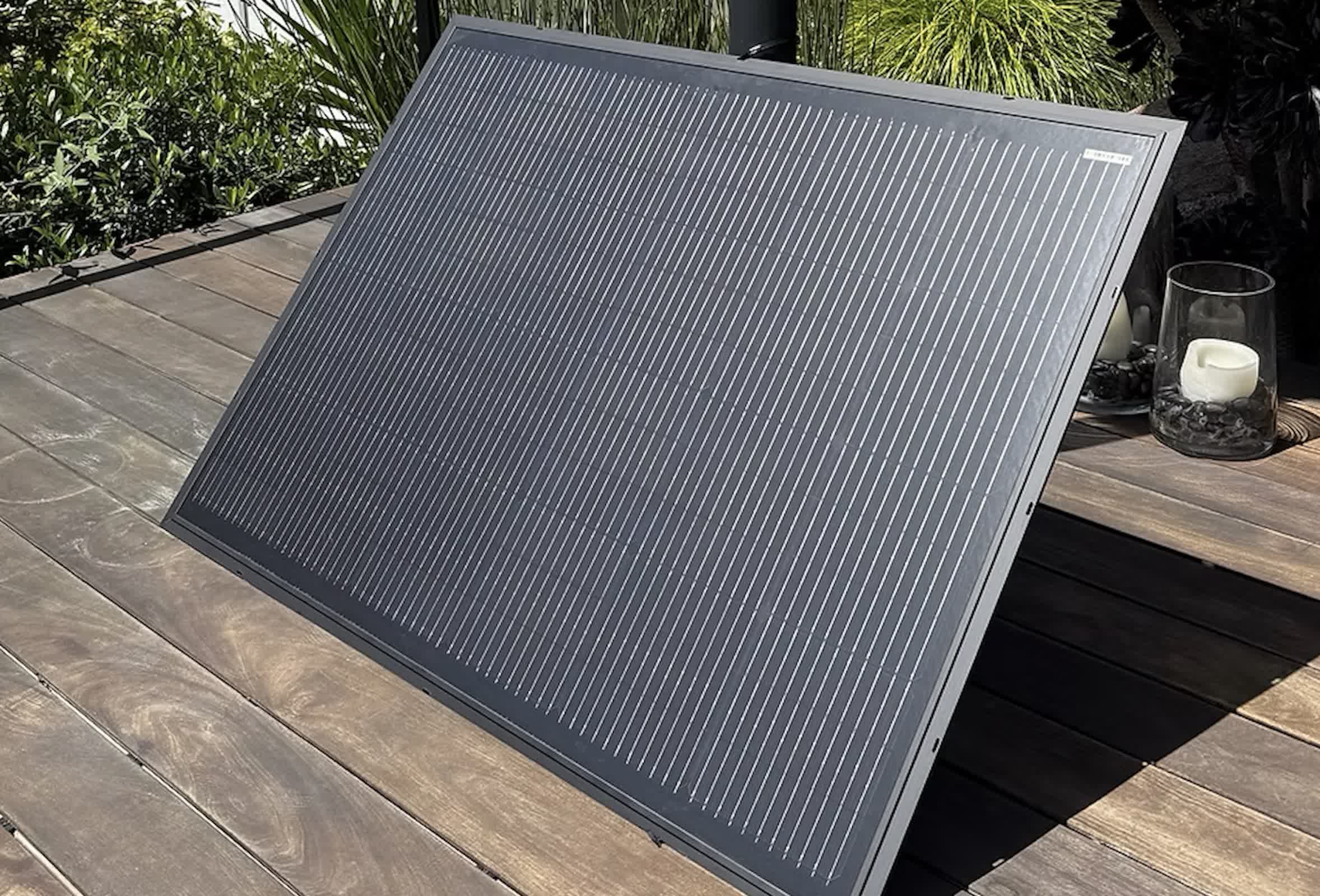
The bill cleared the Assembly and Senate with bipartisan support on Wednesday night and now goes to Governor Gavin Newsom. If he signs it, compatible systems could...
I am kind of curious how over-current protection is achieved with these systems.
Don’t get me wrong; I think the concept is good.
But the circuit breaker is sized to protect the wiring between it and the outlets/devices it supplies. If you’re already close to the max current the breaker can supppy, then you add on a second current source (the panels inverter), you could feasibly supply+draw more current through that circuit than it was originally designed to carry.
For example: a regular 15a circuit + 5a worth of panels (600w); you could now draw 20a through wiring that’s only designed/sized for 15a, before the breaker trips. More current creates more heat, this is a potential fire hazard.
On top of that; switching the breaker off/locking it out doesn’t necessarily switch off all power being supplied to that circuit. If you’re not aware of the solar system that’s also supplying that circuit from another point (very unexpected under current norms) This could cause you to work on wiring that you expect to be unpowered when it’s actually live (you should always check with a volt meter anyway, but still, unexpected hazards).
I would imagine much of this has been thought about; but I’m curious about the solutions (or about the reasoning why it’s not considered an issue)
The back feed is taken care of by the solar inverter already. If it doesn’t detect the proper waveforms from the grid it turns off.
As for the overcurrent, there are sensors (PCS) that can detect current load on a circuit. Alternatively, a dedicated circuit or oversized circuit can be set up to handle it (but would require electrical changes).
Such a “balcony” system isn’t going to be 600 watts. I’ve got a pair of 100 watt panels that together would each make a fairly good awning for any of my windows. I also have a 200 watt Anker brand panel (one of those weird ones that feels like it’s made of a quarter inch thick sheet of denim) that’s the size of a beach towel. 6 of those 100 watt panels would come close to the size of queen-size bed. You’re not going to have many apartment dwellers dangling something that big out the window.
Most people most of the time don’t have circuits loaded to the very edge of the envelope. If you plugged it into a circuit that’s drawing 10 amps…it’ll still draw 10 amps. It’s just that ~8.2 of them are coming through the breaker, the other ~1.8 are being provided by the solar panel.
It does still sketch me out a little because it breaks certain fundamental design rules of the power grid. Power should come from female sockets not male plugs, and it should come from before a breaker, not after.
Most people most of the time don’t have circuits loaded to the very edge of the envelope.
Unfortunately this is awful terrible engineering ethics and does not fly in the real world. “Most” implies that there WILL be a nonzero number of edge cases where someone does have circuits loaded to within an inch of their lives, and a plug-in solar system will lead to a house fire.
I would agree. Hence why I said “This isn’t how I’m doing my personal solar power.”
Apparently American units are coming with an outlet you install in place of a standard outlet which does monitor the combined power, so the building will have to be modified slightly. Still…any more than a couple hundred watts, if you can, have a proper system installed.


I am kind of curious how over-current protection is achieved with these systems.
Don’t get me wrong; I think the concept is good.
But the circuit breaker is sized to protect the wiring between it and the outlets/devices it supplies. If you’re already close to the max current the breaker can supppy, then you add on a second current source (the panels inverter), you could feasibly supply+draw more current through that circuit than it was originally designed to carry.
For example: a regular 15a circuit + 5a worth of panels (600w); you could now draw 20a through wiring that’s only designed/sized for 15a, before the breaker trips. More current creates more heat, this is a potential fire hazard.
On top of that; switching the breaker off/locking it out doesn’t necessarily switch off all power being supplied to that circuit. If you’re not aware of the solar system that’s also supplying that circuit from another point (very unexpected under current norms) This could cause you to work on wiring that you expect to be unpowered when it’s actually live (you should always check with a volt meter anyway, but still, unexpected hazards).
I would imagine much of this has been thought about; but I’m curious about the solutions (or about the reasoning why it’s not considered an issue)
The back feed is taken care of by the solar inverter already. If it doesn’t detect the proper waveforms from the grid it turns off.
As for the overcurrent, there are sensors (PCS) that can detect current load on a circuit. Alternatively, a dedicated circuit or oversized circuit can be set up to handle it (but would require electrical changes).
They can also test to see if the current on the circuit is grid power or another inverter (so you can’t trick it)
I imagine there are two assumptions:
Such a “balcony” system isn’t going to be 600 watts. I’ve got a pair of 100 watt panels that together would each make a fairly good awning for any of my windows. I also have a 200 watt Anker brand panel (one of those weird ones that feels like it’s made of a quarter inch thick sheet of denim) that’s the size of a beach towel. 6 of those 100 watt panels would come close to the size of queen-size bed. You’re not going to have many apartment dwellers dangling something that big out the window.
Most people most of the time don’t have circuits loaded to the very edge of the envelope. If you plugged it into a circuit that’s drawing 10 amps…it’ll still draw 10 amps. It’s just that ~8.2 of them are coming through the breaker, the other ~1.8 are being provided by the solar panel.
It does still sketch me out a little because it breaks certain fundamental design rules of the power grid. Power should come from female sockets not male plugs, and it should come from before a breaker, not after.
This isn’t how I’m doing my personal solar power.
Unfortunately this is awful terrible engineering ethics and does not fly in the real world. “Most” implies that there WILL be a nonzero number of edge cases where someone does have circuits loaded to within an inch of their lives, and a plug-in solar system will lead to a house fire.
I would agree. Hence why I said “This isn’t how I’m doing my personal solar power.”
Apparently American units are coming with an outlet you install in place of a standard outlet which does monitor the combined power, so the building will have to be modified slightly. Still…any more than a couple hundred watts, if you can, have a proper system installed.
About the second point: it appears they will need the same grid intertie circuitry that inverters need …
“…and include equipment that prevents power from flowing back to the grid during an outage”
Yeah, the idea is nice, but it smells an awful lot of wall socket generators and suicide cords