

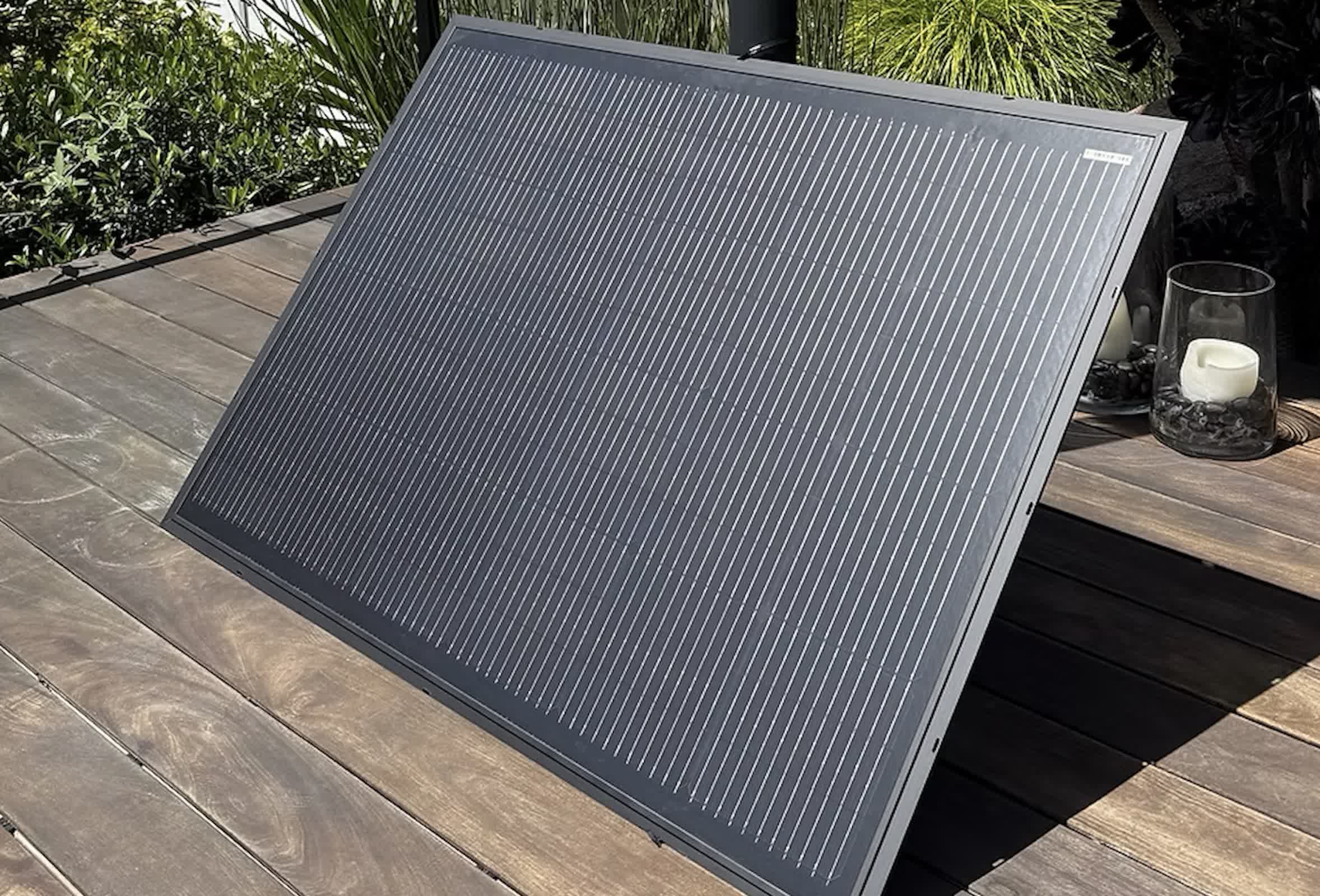
Uh…… anyone got a video explaining how this works so I can learn about it recent solar technology and how to utilize it?
so are these the mythical balcony systems i’ve been hearing about? because i want one to take camping to charge my ebike, and to run my blowdryer on my prosthesis after i shower so i don’t mold.
Yes they are, but they are specifically not what you want or need when going camping. These only work when plugged into an active grid connection, to offset your power bill at home on sunny days.
For camping, you want a battery box that solar panels will plug in to. Often sold as “solar generator” from brands like Bluetti and Jackery.
Hardly mythical…
But they’re not grid-forming. You have to plug it into an outlet.
plug-in solar systems
Damn, I didn’t know they made solar systems that can be plugged in, whatever that means! 🙃🪐
It actually provides power to the house though a regular power socket. (But only if the utility power is also present so it won’t zap workers trying to fix a blackout)
Thats when you unplug from the wall and into the ups! 😀
As someone currently going through the hassle of getting a solar setup going, I feel like I should inform people what I have learned. These solar systems use an inverter, and there’s 2 kinds of inverters. 1) the cheap kind that matches an AC wave form and will not work without being connected to a powered grid and 2) a wave generating inverter which will work without a grid allowing your house to still be powered in the event of a power outage
Yup, and the ones here (and NJ I believe passed today, goes into effect next year) require a powered grid to work. Because of the back feed risk, they won’t work with the joking comment about plugging it into a UPS.
BUT!
Some of them you can yank the DC connection to the microinverter (an MC4 connection usually), which can be connected up to a battery system as a backup/bypass mode. The microinverter after that would also allow you to safely connect to grid, or to a dedicated load in an outage.
Another $800-$1200 though
I am kind of curious how over-current protection is achieved with these systems.
Don’t get me wrong; I think the concept is good.
But the circuit breaker is sized to protect the wiring between it and the outlets/devices it supplies. If you’re already close to the max current the breaker can supppy, then you add on a second current source (the panels inverter), you could feasibly supply+draw more current through that circuit than it was originally designed to carry.
For example: a regular 15a circuit + 5a worth of panels (600w); you could now draw 20a through wiring that’s only designed/sized for 15a, before the breaker trips. More current creates more heat, this is a potential fire hazard.
On top of that; switching the breaker off/locking it out doesn’t necessarily switch off all power being supplied to that circuit. If you’re not aware of the solar system that’s also supplying that circuit from another point (very unexpected under current norms) This could cause you to work on wiring that you expect to be unpowered when it’s actually live (you should always check with a volt meter anyway, but still, unexpected hazards).
I would imagine much of this has been thought about; but I’m curious about the solutions (or about the reasoning why it’s not considered an issue)
I imagine there are two assumptions:
-
Such a “balcony” system isn’t going to be 600 watts. I’ve got a pair of 100 watt panels that together would each make a fairly good awning for any of my windows. I also have a 200 watt Anker brand panel (one of those weird ones that feels like it’s made of a quarter inch thick sheet of denim) that’s the size of a beach towel. 6 of those 100 watt panels would come close to the size of queen-size bed. You’re not going to have many apartment dwellers dangling something that big out the window.
-
Most people most of the time don’t have circuits loaded to the very edge of the envelope. If you plugged it into a circuit that’s drawing 10 amps…it’ll still draw 10 amps. It’s just that ~8.2 of them are coming through the breaker, the other ~1.8 are being provided by the solar panel.
It does still sketch me out a little because it breaks certain fundamental design rules of the power grid. Power should come from female sockets not male plugs, and it should come from before a breaker, not after.
This isn’t how I’m doing my personal solar power.
-
The back feed is taken care of by the solar inverter already. If it doesn’t detect the proper waveforms from the grid it turns off.
As for the overcurrent, there are sensors (PCS) that can detect current load on a circuit. Alternatively, a dedicated circuit or oversized circuit can be set up to handle it (but would require electrical changes).
About the second point: it appears they will need the same grid intertie circuitry that inverters need …
“…and include equipment that prevents power from flowing back to the grid during an outage”
Yeah, the idea is nice, but it smells an awful lot of wall socket generators and suicide cords
Now do personal wind and/or wind/solar combos, and we got ourselves some stew!
https://www.amazon.com/home-wind-turbine/s?k=home+wind+turbine
Those are not realistic for home use. Usually have to have up about 11 mph of wind for it to even start working
From what I’ve read, wind doesn’t really scale down to home use the way solar does.
And those cheap Amazon generators (whether they are attached to wind turbines or sold as standalone units) never come even remotely close to the advertised output.
Dude, all you need to do is spend $13k for one of these,
And then mount it 30 feet above the tallest tree or building near you.
How hard can it be?
I thought it would be nice to get a wind turbine since that could produce some useful electricity in months that contain the letter ‘r’.
11k EUR
2 kW
Price of electricity is like 10 cents a kWh average throughout the year
11000/2/0.1 = 55000 hours
Will pay off if it produces 2 kW for 6 years straight. I don’t think I’m getting one.
i mean, if you’re in flat open farmland with a steady breeze why the hell not run up a pole?
Most of us aren’t on farms. But yeah, if you are I’d definitely look into it. Especially if you’re running large refrigerators and/or freezers.
After the dollar collapses all of us are going to be on farms
Regardless, you can run it at night when the sun isn’t out. If you have enough back up battery storage, slow and steady is fine.
From what I’ve read, wind doesn’t really scale down to home use the way solar does.
Where did you read that?
I’ve looked into it for exactly this reason. 1 kW at night would go a long, long way for me. It doesn’t work.
If you’re lucky, a small turbine might be able to charge your phone. Maybe. Intermittently.
The turbines scale exponentially with blade size, not linearly. And none of it works well at suburb/city height. You need this things 100ft in the air with large blades.
At that point you might as well get a real one and power your neighborhood. Those things really don’t scale down effectively.
Here is a handy guide: https://ecowised.com/best-home-wind-turbines-for-residential-use-top-models-costs-what-to-look-for/
Edit: Here’s one from Europe: https://energysavingtrust.org.uk/advice/wind-turbines/
The main issue is the small size tends to increase the required wind speed required to initially overcome friction, and those higher windspeeds are rarely sustained at ground level. Large turbines work efficiently because they are up above the turbulence caused by houses, trees, buildings, etc.
I don’t save links to everything I ever read, so you’ll have to search it up if you’re curious for more details.
Really depends on where you live. If you’re in suburbs they’re completely fucking useless. If you’re in the country with over a mile of relatively flat fields upwind it’ll work, especially if you already have an old antenna tower or can put one up.
Also, the larger commercial tirbines are trying to generate commercial levels of power, not residential. And for a given wind speed the power generation scales by blade length, and a lot of that height is also needed as clearance for the blades
This guy tested a $100 solar panel and windmill and found the solar panel was much, much better. https://youtu.be/iHulKsD35Hc
This guy gets into the math behind the Tesup Atlas wind turbine. Basically the real output people are getting could be matched by 200-400watts of solar. https://youtu.be/6ixUmlN-cYc
The 2 biggest problems with scaling down turbines.
-
Hard 60% efficiency limit called the Betz Limit
-
Wear and tear on smaller parts is the same as bigger parts but with lower output efficiency.
I guess a 3rd is that the surface area to volume ratio is probably what makes large turbines practical in the first place.
Less efficient doesn’t mean it’s useless, especially at night.
It does if the wind isn’t blowing fast enough to move the turbine. They cover that in the 2nd video.
Get a different turbine?
-
Where did you read that?
https://solar.lowtechmagazine.com/2008/09/urban-windmills-harm-the-environment
Physics are quite simply not on the side of small-scale wind power. Which is fine, it doesn’t have to - solar works really well for small-scale applications.
Wind is too variable. Sun comes up every day, and getting laminar wind is difficult in suburban areas. Expensive and turbines wear and get iced in winter. They can work in rural settings which is why they have been using turbines on farms for over 200 years.
Depends on geography and climate. Some places in my area are 24/7 windtunnels.
But you need laminar wind. It suburban areas there is too much turbulence from objects.
Im not going to make a bunch of links. Just search why home wind sucks.
Let’s see if Newsom signs it. With the way he tried to push through liability limits for electric companies (who seem to be too good at creating wildfire disasters) I have my doubts. His presidential ambitions have led him down the dark path of caring more about corporate sponsorship than voters.
Is california on a streak? Thats the 3rd good thing I have heard about them.
I’d like this too, maybe someday. Technical and safety issues can be resolved somehow.