
If I ever have my own home, my house will have a rhombus room.
“Don’t you mean a rumpus room?”
Bro, that’s not even a real shape.
In my culture, rhombus is the basis of a vagina pictogram. In my culture, rhombus is every schoolboy’s favorite shape.
https://commons.wikimedia.org/wiki/Category:Czech_vulva_symbols
This is amazing and thank you for sharing. The ability of the human race to come up with different yet universally understood yonic symbols is heartening. Like no matter what place or time, we’re all in this together and we will be drawing genitalia.
Rhombuses are really commonly used in trigonometry puzzles. You know, “Here’s a bunch of lines and a couple of angles, find the angle at X.”
Isn’t a rhombus just what you call a diamond that’s having a bad day?
All shapes will be hunted down to extinction until the one and only remains.

Yeah, it’s pretty good. But it’s not a hexagon, which is the bestagon…
Looked around my room
Stacks of books
Rectangular posters with rectangles on them
Windows, curtains, televisionThen i saw the plaid shorts i am wearing and had a good laugh
grabs tinfoil hat
Wait until they find out it’s all actually triangles
Every square you ever met is a rhombus that gave up its art career and got a boring 9-5.
Yes! Even a rhombus!! https://comb.io/Sks1NZ
It’s also called diamond or zoomie square. You know, cuz it’s like a square that’s going so fast the pointy parts start at the tippy top
When I played “Psychonauts: In the Rhombus of Ruin” I got reminded again that this thing actually exists.
This person hasn’t done math past elementary.
I went up to Calculus I in college (along with some physics and engineering), and I’ve done a bit of amateur math outside of school … but the concept of a rhombus was still used exactly zero times.
The engineers prefer triangles, the physicists prefer circles, and the pure mathematicians are usually dealing with weird shapes that don’t even have names. Who uses the rhombus?
A rhombus is just an equilateral parallelogram, and parallelograms are the easiest way to approach vector cross products. And you’re 3/4 of the way there when you do tip-to-tail vector addition. They should have come up at least a couple times in geometry. Rhombi pop up as faces in lots of polyhedra, and tiles in lattices. I don’t know much about crystallography, but I’m sure they make an appearance.
Right there with you, I didn’t use it in analytical geometry, calcs 1-3, diff eqs, or numerical methods. I don’t think it would have shown up in my other math classes either. I’m pretty sure the rhombus is nothing more than a happy shape.
What’s numerical methods all about?
I mean I think I can intuit a little and could Google a lot, but hearing from someone who seemingly somewhat recently studied is a unique chance.
As the other poster succinctly said, it’s about iterative solving problems. What might not be obvious is where you want to use this.
Let’s say you are holding onto a continuous, all-metal cooking pan’s handle and you turn on the burner; at what second will it be too hot to hold? If we assume the pan is starting at 20 C and it’ll be too hot for your leathery, lemmy-browsing hand at 100 C, then we at least have some basic bounds on the problem, but how do we think about the middle parts?
We could say that the burner is putting out about 5 kW of energy (or more simply, that the pan’s bottom has a fixed input of 5 kW (a so-called boundary condition). With a basic equation translating energy input into temperature (factoring in specific heat), we at least know the temperature of the bottom of the pan at a given moment, but what about the top of the pan and, most importantly, the handle? The temperature in these places isn’t climbing because they’re getting licked by flames, but due to thermal conductivity away from the bottom.
Thermal conductivity is actually one of the simplest questions in partial differential equations (PDEs), and is addressed with the aptly named heat equation. In extremely casual terms, the heat equation (du/dt = L u) is saying that the heat at a given position is determined by its past heat plus the past heats of positions around it. Our job as mathematicians is to express our problem using a so-called weak form of the heat equation that makes it possible for an iterative solution.
We can solve weak form equations with a framework like the Finite Differences method (which is a little dated but easier to understand than other methods, and also still quite effective). This very basically means we’ll create a fixed grid of points, then express the relationships between them with algebra.
Once we have our algebraic mesh and we are happy with all of our boundary conditions, we can start the simulation. We watch as the temperature immediately shoots up on the bottom of the pan (followed soon after by the top and edges), then as heat slowly transfers up the handle until it reaches 100 C at the end.
In doing these problems, we make as many simplifications as possible in the boundary conditions, because the equation’s solution space is unfathomably large. Everything we can do to constrain it (easy heat source, exact physical parameters of our materials, etc) shrink the solution space closer to one that matches our actual problem.
As a final thought, lots of very bright people have spent entire careers designing heatsinks using numerical methods, so don’t take my description of the heat equation as an easy problem to mean it’s not a great line of inquiry, but rather that the field is really fucking hard. Anyone who does this stuff can, in fact, hold a 90 C pan handle because their tolerance for pain is astronomical.
It’s all about solving things iteratively. Usually applied to how computers solve for things.
Thank you for the summary
This is true for most parallelograms and later polygons.
Daughter just went through parts of middle school that seemed to focus on things like rhombuses and trapezoids. The only thing I"m thinking, as an engineer, is when was the last time I gave af about any of those shapes? I would just reduce them to triangles and rectangles.
Trig skills are WAY more useful than knowing how to calculate specific polygon shapes… I don’t mean to say that middle schoolers should be learning trig… just that the time spent learning how to do specific shapes is a literal waste of time that they could be using to prepare for later things (like trig).
As someone in education i would bet money that since it is a vocabulary word with a simple definition in a subject that is hard to teach, it is included to make things easier on the teachers and students. Mind you easier isnt often a good thing, and in this case I’d say its lazy and irresponsible to focus on things that don’t scaffold well or have much practical use
Maybe it shows up in some of the dreaded standardized tests, and that’s why they’re sure to teach it?
What is a rhombus but two triangles, my dear
They’re not really mentioned in more advanced math. It’s all polygons.
Ok, triangles are often treated as a special case. But for anything else it’s a n-sided polygon.
You mean regular polygons. A rhombus is an irregular polygon. Triangles are also all polygons. An equilateral triangle is a regular one.
Nah in my experience everything is a circle. You see π even in places you don’t expect
deleted by creator
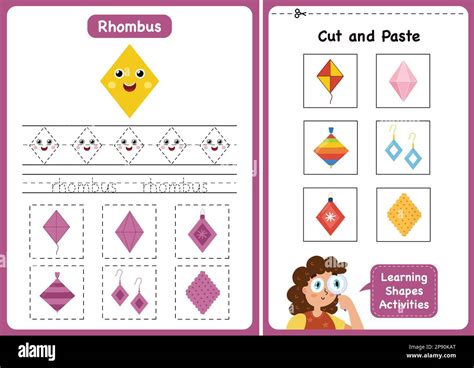
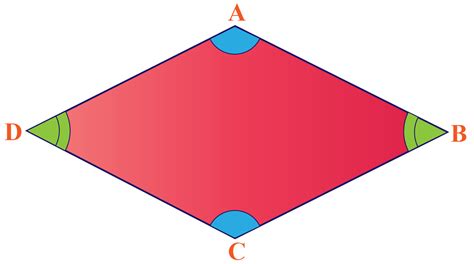
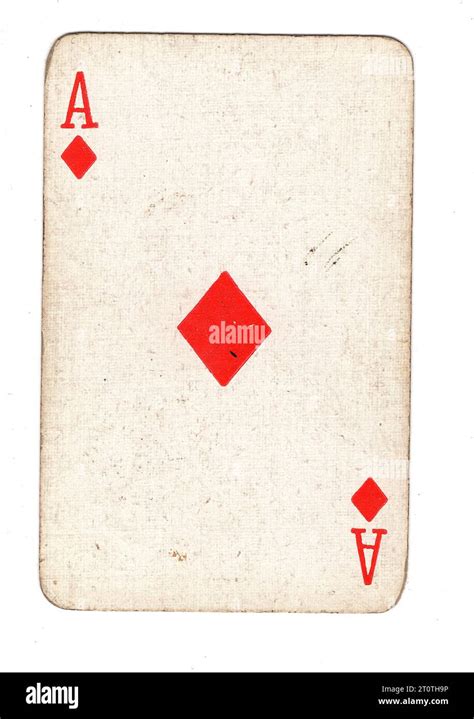
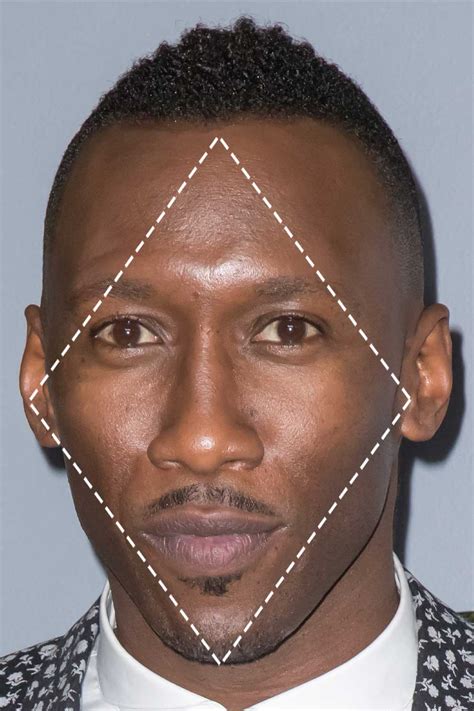
Those are parallelograms.
They would be parallelograms if all 4 sides didn’t have the same length. But they do, so it’s rhombus.
We learn to learn how to learn.
Don’t forget the poor trapezoid.
RIP
Every 3 ft square box that you shoved a bunch of 3.25 ft long irregularly shaped items into then closed the flaps on is a rhombus.
Some pretty rhombus logic if you ask me