in some places they designed the roads in a way that drivers accidentally run a red light, or thier cars end up “rolling over” the stop line during a red light.
A camera is payed for ideally by the speeder, and any extra “revenue” should then go to the redesign of said streets, roads, and roadways.
And then the city gets a taste for this free money and lowers the speed limits, reduces the cutoff, and does whatever they can to keep fining people and increasing revenue. Fuck all this shit.
Plenty of cities have been caught reducing yellow light times so that they earn more from red light cameras. This actually leads to more accidents as people slam on the brakes when they see a yellow even if they would have plenty of time to make it through a light under normal circumstances. This shit is always introduced in some positive way (“it’s only going to catch those evil, criminal speeders and they’ll be paying for all this! Look we caught a guy doing 100MPH on the freeway!”) and quickly morphs into some dystopian bullshit (“our camera caught you driving 25.3MPH in a 25MPH zone. Here’s a $1,000 fine with no way to contest it”)
Urban Spite Design. Another example is sprinklers in shop doorways to prevent homeless people from sheltering from the rain while the shops are closed.
Unironically yes. Traffic jams when the road gets full, and people have a time budget for traveling. So by slowing traffic down, you reduce demand, and thus the risk of traffic jams. Which in turn leads to a better experience for everybody. Bonus points if you also provide alternatives for car travel.
Oregon is doing this and it doesn’t fucking work. You can’t “reduce demand” for something that is a requirement to exist in our society. This is like “reducing demand” in emergency rooms by increasing wait times to 36 hours. Congratulations people aren’t visiting the ER anymore because they’re all dead in the parking lot.
This is the type of shit some 2.0 GPA MBA graduate comes up with because “it makes sense on paper based on our (flawed) data and logic.”
Like what percentage of people do you think just drive around in city traffic “for fun?” Those are the only people that might stop driving so often when you intentionally create traffic jams to reduce demand. All the people trying to get to work, to the store, or to pick their kid up from school are still going to need to be on the road because there is no alternative.
The traffic calming in Eugene, Oregon, has already reduced the number of annual traffic fatalities from 22 to 10. I don’t know what you can call this other than a resounding success.
The issue is most of our roadways are designed like strodes.
We should design streets as streets, and design roads as roads.
Roads have no cut curbs or driveways, no parking is allowed on a road. Traffic lights and intersections are minimized and roundabouts are preferred. Roads are like low capacity highways in a sense. Trails run beside roads as opposed to sidewalks to minimize conflicts between pedestrians and vehicles.
Streets are narrow and lower capacity, sidewalks and pedestrians are common. Street parking is allowed. Curbs and driveways are common. Speeds are low and intersections are other signalized or stop signs are used.



If they really wanted to reduce the speed of vehicles and increase safety they would introduce aggressive road design.
It’s the same idea behind preventing people from skating on benches. You can’t fine it away, so they put bars on benches to make it impossible.
That is also true, but it is expensive to implement.
in some places they designed the roads in a way that drivers accidentally run a red light, or thier cars end up “rolling over” the stop line during a red light.
This would be how you take a strode and turn it into a actual street with proper.
Keep in mind though, the above is payed for by tax payers, i.e. all citizens regardless of if they speed or not, or have a car or not.
A camera is payed for ideally by the speeder, and any extra “revenue” should then go to the redesign of said streets, roads, and roadways.
And then the city gets a taste for this free money and lowers the speed limits, reduces the cutoff, and does whatever they can to keep fining people and increasing revenue. Fuck all this shit.
Plenty of cities have been caught reducing yellow light times so that they earn more from red light cameras. This actually leads to more accidents as people slam on the brakes when they see a yellow even if they would have plenty of time to make it through a light under normal circumstances. This shit is always introduced in some positive way (“it’s only going to catch those evil, criminal speeders and they’ll be paying for all this! Look we caught a guy doing 100MPH on the freeway!”) and quickly morphs into some dystopian bullshit (“our camera caught you driving 25.3MPH in a 25MPH zone. Here’s a $1,000 fine with no way to contest it”)
proper what, you can’t leave us hanging like that!
A proper strode.
Camera profits probably go to cops.
Most of it goes to the companies running the cameras from what I’ve seen.
Gotta pay for all those wrongful death judgements you can’t weasel your way out of and the cost of moving the killer one town over.
The bars are mostly to prevent people from sleeping on the benches
Urban Spite Design. Another example is sprinklers in shop doorways to prevent homeless people from sheltering from the rain while the shops are closed.
Because those doorways will be covered in shit and piss otherwise. Doorways are not the solution.
I know I was just trying to be less dystopian.
You live in a dystopia we are beyond trying to pretend.
Depends on a lot of factors. But often funding a project that generates money is easier to push than one that creates some abstract value
Unironically yes. Traffic jams when the road gets full, and people have a time budget for traveling. So by slowing traffic down, you reduce demand, and thus the risk of traffic jams. Which in turn leads to a better experience for everybody. Bonus points if you also provide alternatives for car travel.
Oregon is doing this and it doesn’t fucking work. You can’t “reduce demand” for something that is a requirement to exist in our society. This is like “reducing demand” in emergency rooms by increasing wait times to 36 hours. Congratulations people aren’t visiting the ER anymore because they’re all dead in the parking lot.
This is the type of shit some 2.0 GPA MBA graduate comes up with because “it makes sense on paper based on our (flawed) data and logic.”
Like what percentage of people do you think just drive around in city traffic “for fun?” Those are the only people that might stop driving so often when you intentionally create traffic jams to reduce demand. All the people trying to get to work, to the store, or to pick their kid up from school are still going to need to be on the road because there is no alternative.
The traffic calming in Eugene, Oregon, has already reduced the number of annual traffic fatalities from 22 to 10. I don’t know what you can call this other than a resounding success.
Can’t speed when the roads have lower capacity and the other cars are in the way.
Why not eliminate roads entirely?
No speeding or traffic!
The issue is most of our roadways are designed like strodes.
We should design streets as streets, and design roads as roads.
Roads have no cut curbs or driveways, no parking is allowed on a road. Traffic lights and intersections are minimized and roundabouts are preferred. Roads are like low capacity highways in a sense. Trails run beside roads as opposed to sidewalks to minimize conflicts between pedestrians and vehicles.
Streets are narrow and lower capacity, sidewalks and pedestrians are common. Street parking is allowed. Curbs and driveways are common. Speeds are low and intersections are other signalized or stop signs are used.
This is a strode: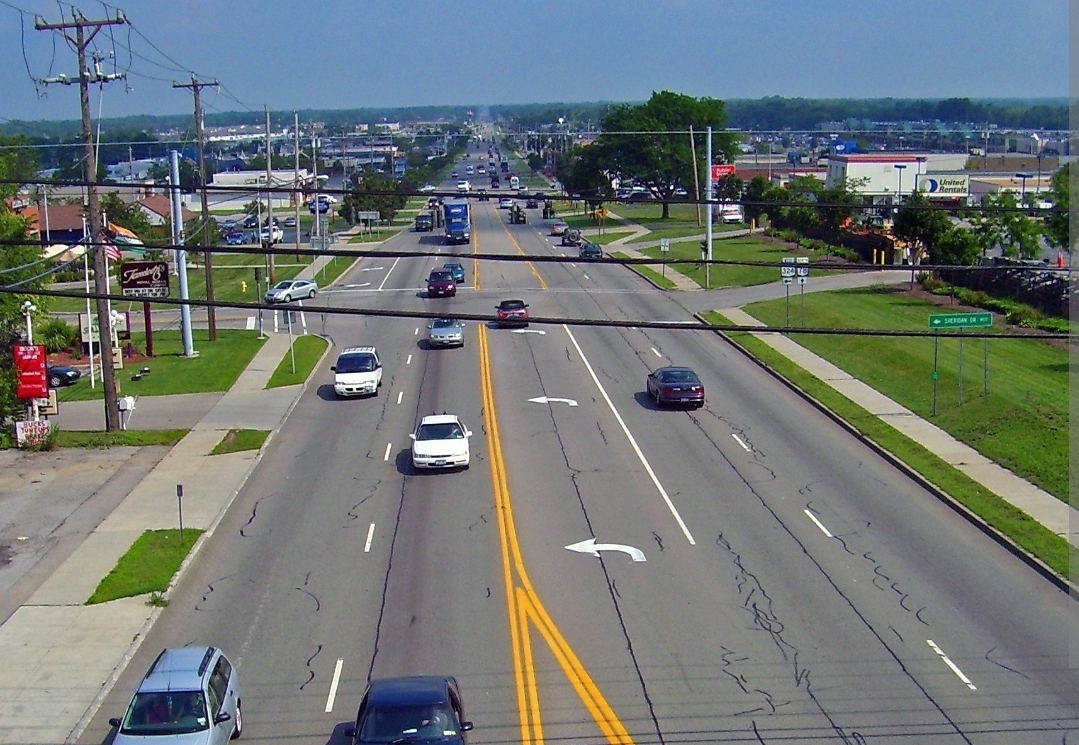
Just FYI the term is spelled stroad.
It’s not the worst idea I’ve heard. I’m listening.
I’m down.
Road traffic? Great! Drivers are less productive and scientifically worse people than non-drivers.