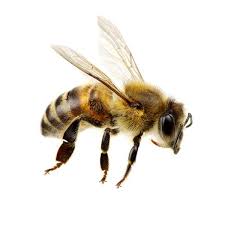
Centaurs have four legs and two arms. Centaurs and dragons are therefore related.
No because that’s not how insects are classified.
Winged insects still have 6 legs in addition to the wings.
When Plato defined humans as beings with two legs and no feathers, Diogenes produced a plucked chicken and asked if that made it human.
When we try to define things by their positive attributes, the result will generally fall short of both everyday usage and physical reality.

Am I a plucked chicken, then?
i don’t see any feathers, so yes.
BAWK
Sure. Haven’t you ever seen a dragonfly?
Insects is often classified as an animal with exoskeleton and comes with 3 parts body of head thorax and abdomen. Dragon failed those check.
If I remember correctly, ancient dragons in Elden Ring have stone skin. Maybe that can count as an exoskeleton :P
Wait til you hear about dragonflies
Whoa whoa, they can fly now?!

i love this line.
it makes all my amateur film attempts feel more professional. because sweet jesus fuck that’s bad dialogue.
no, insects are real
Wrong.

Now, how to make it breathe fire…
Dragons do not really exist. They are fantasy creatures, like fairies, god, or ghosts. So they are fundamentally different than insects, Pete Hegseth or Gonzo the Great.
god
or Gonzo the Great.
you’ve got someone on both sides of your list
Just test if insect repellent works and you have your answer
No.
But it’s one of those things that always chafe me in depictions of fantasy, mostly film.
Of course mythical creatures aren’t real but if they were, in and of an otherwise normal earth-like biology, it shouldn’t be too hard to depict them accordingly.
…
TIL about the Wyvern.
Yes, but not all dragons are dragons. Some are closer to bats and their front arms are their wings.
Those aren’t dragons but wyverns.
All wyverns are dragons but not all dragons are wyverns.
But some people don’t know that, which is why I point it out.
I also thought that ones with wings and back legs only were wyverns
is there a dragon with front arms and back wings?
It depends. The distinction is based on the use in heraldry. “Originally, heraldic dragons could have any number of legs, but, by the late Middle Ages, due to the widespread proliferation of bestiaries, heraldry began to distinguish between a “dragon” (which could only have exactly four legs) and a “wyvern” (which could only have exactly two).” (Wikipedia citing Basic Heraldry by Friar and Ferguson) But whether you follow that distinction is completely up to the individual.
For some examples: Smaug from The Hobbit is described like a bat: “Smaug lay, with wings folded like an immeasurable bat[…]”. Both Skyrim and Game of Thrones have their dragons with two legs and wings, like bats or heraldic wyverns. The main source of the distincion is modern media, as far as I am aware, is Dungeons and Dragons, which distinguishes between “true dragons” with four legs and wings and “wyverns” with two legs and wings (but who are also a subtype of dragon). (And if we go to Smaug’s inpiration, Fafnir, I don’t believe we get to hear much about his limbs. We know that he slithers and that he has fins. So he is probably snake-like, maybe with some legs or wings (and Völsunga saga says he has shoulders, according to Wikipedia, so he has some limbs, probably).)
TL;DR: A dragon has as many limbs as the author or artist says they do.
That is likely what I am thinking of.
Now shove that into an image generator 😱